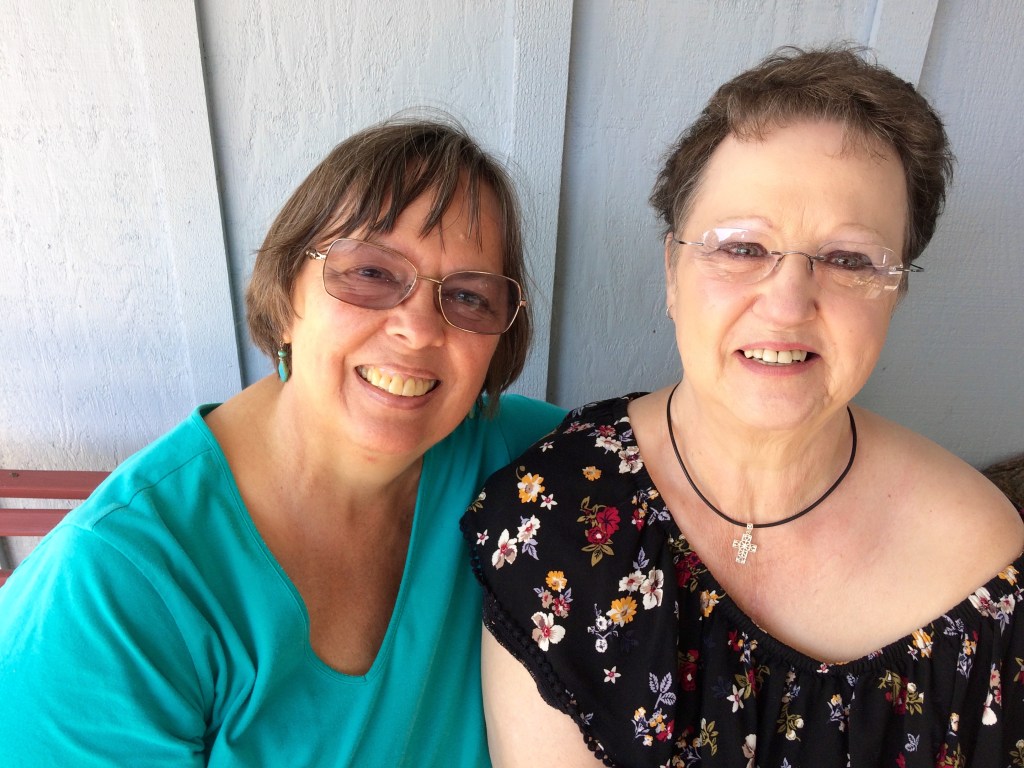
Finding A Way To Share My DNA Journey With Others

(October 18, 2020)

The field of genetic genealogy is a fascinating one, but it can also be complex and confusing, especially for those just getting started, many of whom would likely be my readers when my newest book, Finding Sisters, gets published. I was still just barely more than a novice myself when I started the project, though I eventually found what I was looking for (with lots of generous assistance from others more experienced than I), and I wanted to share that story with others in a way that would encourage them to get involved in their own genetic history while not downplaying the complexities of the journey or throwing the shade of discouragement on anyone who felt confused by all the details that are a necessary part of the search for genetic ancestry.

Because mine was a story with a clear beginning, middle, and end, I started to write about the details in chronological order, and because I had been saving absolutely everything from the very beginning of my explorations (emails, documents, photos, notes from conversations, relationship charts, family trees, etc.), this meant going back over what had happened along the way in minute detail. This kept me honest about what had taken place and when, and it was also a great way to refresh my own memory about how everything had unfolded. In the excitement of the discovery process, it had been easy to conflate the details, to mix up how and when certain things had occurred, and to forget certain important elements of the story.

As I started to present the developing chapters to the women in my writing group, two issues became very clear. First, the scientific details and all the family names were confusing to someone who was not directly engaged in the search, even when they were interested in the story. I was fascinated with what I was discovering, but my audience was mostly just bewildered and kept losing the narrative thread. This was the proverbial problem of not being able to see the forest for all the trees. One of the first things I needed to do, then, was to limit my use of the technical language in the story itself (footnotes became my good friend, so I could include the technical details for those who might want them but without impeding the narrative through line). Another was to consider visual aids in the form of relationship charts and/or developing family trees at various points in the story to help the reader understand the intricate web of relationships that was unfolding.


This is what I eventually discovered about my birth mother, her relationships with various men, and her other children, my maternal half-siblings, two of whom were deceased long before I knew who they were. Because the file is a pdf, which is not supported as an available image in WordPress, this is a screenshot of the file that will become an illustration in the book itself.

The other complexity was the incredible number of names involved in a genealogical research project. If anyone has ever done a family tree for the family members they already know about, it’s crammed with surnames, often different within every generation due to marriages, blended families, and the like. And for the adoptee, this is even more complicated because all the family names we might know from our own growing up usually have nothing at all to do with those in our genetic lineage. As well, some of my extended genetic family members were not interested in being linked to me, the illegitimate outsider, according to some friendlier folks I encountered along the way. I solved this twofold problem by eliminating surnames in the story I was telling. Most people can easily keep track of multiple characters by first names, so that’s the route I chose to write about my genetic families on both sides, maternal and paternal. According to the ever-astute members of my writing group, not knowing the surnames did not distract from the primary account of finding my two living half-sisters and sharing more about the family backgrounds of both my genetic parents.

As I continued to share my experiences with the writing group, it became clear that the story was just as much about my developing relationship with my Swedish search angel, Thomas, as it was about my genetic family. Thomas was distant part of that family (a maternal sixth cousin as it turned out), but that didn’t become clear until well into the adventure. So instead of simply being a friendly technical facilitator for my unfolding narrative, Thomas eventually became a fully fleshed out character (as full as possible for someone you’ve never met in person, that is) and an important part of the story.

One of the other things that those who heard my story along the way valued was the occasional photo that had come my way from extended family members or other sources. These photos helped my audience to define and identify with my genetic parents and other family members. Because I had her name early in the search process, I was able to get her photo from my birth mother’s high school yearbook, and once I contacted members of her family, finding other photos was simple because they were happy to share. Finding images of my birth father was much more difficult, especially since his name was one of the last ones I was able to uncover. But once the connection had been confirmed, extended family members were pleased to be able to share the images they had with me, though because he had died so young, there weren’t too many of them available. The photos below are what my parents would have looked like in the summer of 1948 when I was conceived while they were dating.

Glenna’s senior picture from her high school yearbook
A photo taken when Bud was in the Army in Labrador, age 19

I presented my chapters to the writing group two separate times over the nearly two years that I worked on the manuscript: first drafts and then, after addressing the first set of comments, I shared the revised drafts a second time, which gave me a chance to revise a second time. All these revisions took place before I submitted the manuscript to the publisher for a possible contract, which happened just a month before the covid-19 shutdown in March 2020, and I signed my contract with the publisher in May. At the moment, I’m still sitting in the queue of books to be edited at Sunbury Press, but I expect to start working with the editor they will assign to me when I get to the head of the line fairly soon.

In the meantime, I’m working on recording the audiobook version of Keeping the Lights on for Ike and working on new writing. So, what’s next for this writer? Perhaps a more traditional memoir is in store. I’ll write about that next time. And hopefully about the process of working with my editor on Finding Sisters.
How the Journey Unfolded

(August 24, 2020)

Last month I promised to share some info about how my journey into genetic genealogy got started. Back in 2014, I didn’t know that term existed, much less what it really meant. But once I’d done a DNA test out of a curiosity to know more about my own genetic background (I had been adopted at birth), and when a distant cousin with expertise in building family histories had contacted me to talk about our family connections and to help me put all the pieces together, things started to move really fast. In fact, within a few days of contacting me in the spring of 2015, this cousin (my search angel) had all kinds of ideas for how he could help me find my birth mother from the single clue I had. Our email correspondence was detailed and voluminous, and of course I saved it all because I wanted to be clear about everything he was saying, though at the time I had no ambitions other than wanting to remember everything he was telling me and teaching me about genealogy research and about interpreting DNA test results. It was all happening so fast that I had to reread messages with some regularity to keep up with the ideas and leads I was being given.

I won’t give you the play by play of what happened on my journey into the work of genetic genealogy (that’s what the new book does), but I will say that before the end of 2015, I was able to connect with and meet my birth mother and maternal half-sister in person, to confirm the relationship with my birth mother via DNA testing, and to hear some of the story of how and why I was given up for adoption when she had a child out of wedlock just a few weeks before her 20th birthday. I also discovered what happened to her in the years following my birth and learned I had three maternal half siblings, though one had died in infancy and another was deceased some years before I came on the scene. To say I couldn’t have done it without my search angel cousin would be an extreme understatement. This distant cousin was incredibly helpful and taught me an enormous amount about how DNA testing works and how it can be interpreted and used to connect various family members.

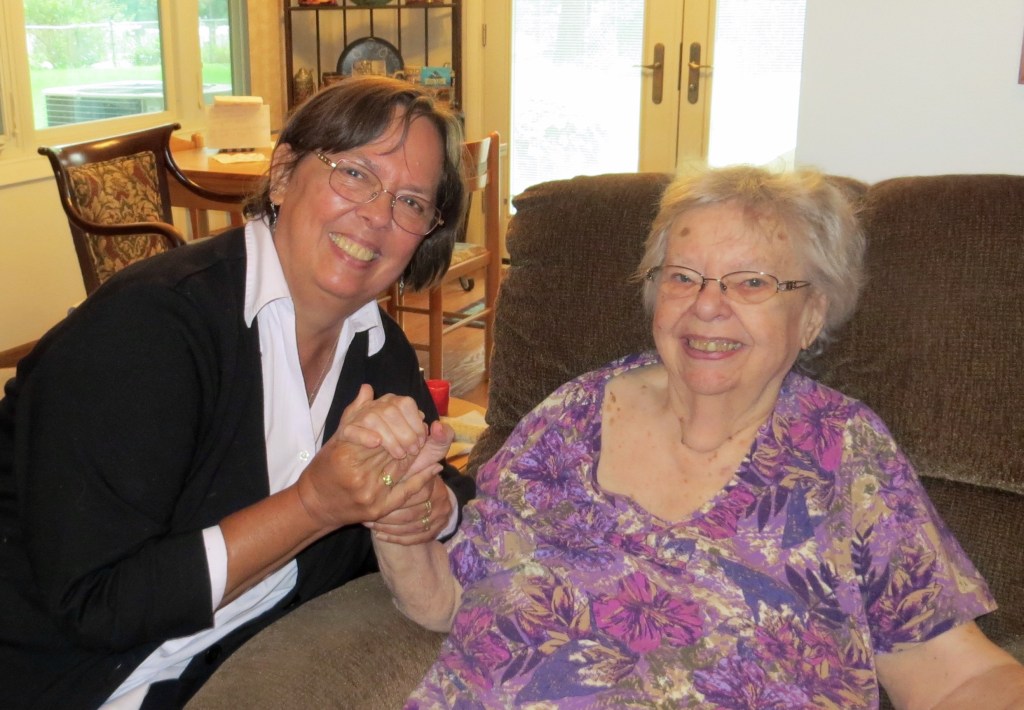
Meeting my birth mother in September 2015

After the first excitement of meeting my mother and sister, the trail went cold on finding my genetic father because my mother, in her middle 80s when I met her, was struggling with dementia. My maternal half-sister, April, was incredibly helpful in our conversations and very supportive of my search, but my mother could no longer remember the name of the man she’d been dating and who’d gotten her pregnant in the summer of 1948; it made her cry every time we tried to ask new questions about him. She remembered that he was a pilot, though she never “went up” with him and wasn’t certain what kind of planes he flew, and that they met at a dance, but that was about all. She died only a few months after I met her, but whatever she had known about my father was mostly gone even before she passed, which made me sad, not so much because I needed to know but because it made her so sad. And since birth certificates in that day didn’t include the name of the child’s father unless the couple was married, there was no paper trail on him, either, even when I finally did get a copy of my pre-adoption birth certificate. I learned through newly discovered relatives who knew the family history that my birth mother had herself been an adoptee, so another layer of mystery was added that would eventually have to be explored to get the whole story.

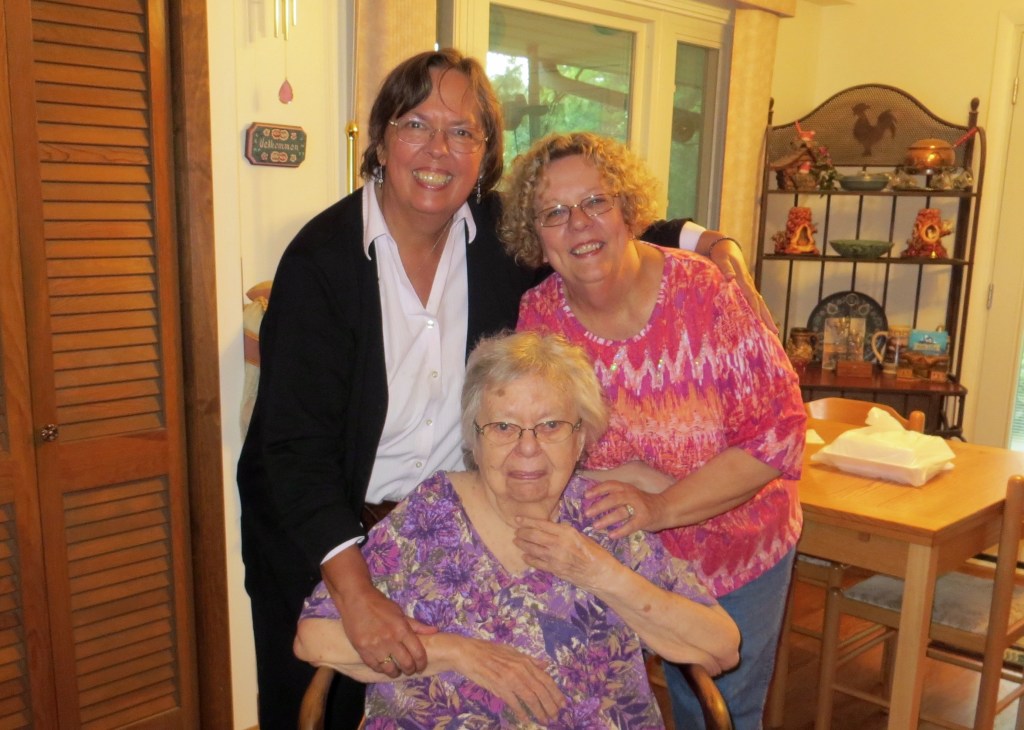
My birth mother, maternal half-sister, and me in September 2015.

After this flurry of initial excitement, nothing at all happened for another year to help me get closer to any information about my mysterious birth father. Actually, I think that’s the rhythm of genetic genealogy: hurry up and wait; hurry up and wait. Then out of the blue, a surprise genetic match popped up for a close relative, a paternal half-sister who didn’t match with my mother. She had also been born out of wedlock and subsequently adopted, and I discovered that my mother wasn’t the only girl this guy got pregnant during the summer of 1948 because I’m only four days older than this sister! I’m not a person who keeps journals, but I was keeping every single email message that I sent or received that had anything to do with my search for genetic relatives (thank heavens for email folder systems!), and this new development got me thinking that there might be a larger story to write someday. It took almost another year before I was able to meet this other new half-sister in person, and we had little luck in finding serious candidates for our genetic father because neither of our birth mothers would (or perhaps could) reveal his name. Finally, we decided to both take a new DNA test with a second provider (DNA testing services don’t share their data with other testing services) and different matches that we shared started to surface in this new database that eventually would lead us to the man we had started calling Mr. X.

Me with my newest half-sister, Ann

It took us several more months to communicate with these new matches, to get the potential relationship sorted out in our heads, and eventually to find possible relatives who were willing to take a DNA test at our expense before we were able to find enough close relatives that we became quite sure of who our father had been. Unfortunately, our Mr. X had died in a crash piloting his own small plane during a heavy fog just days before his wedding and before either of his illegitimate daughters had turned two years old. We suspect he never knew about either of us.

Eventually, I also found a likely candidate for my genetic grandfather through multiple DNA matches in a different clan, matches that my paternal half-sister did not share. So now the challenge became how to tell this rather remarkable story in a way that other people would be interested. That’s what I’ll write about next month. Enjoy the rest of the summer.

So, What’s Next?

(July 10, 2020)

Due to heat, humidity, and an out-of-control pandemic (at least it seems so in the US), this entry will be a bit shorter than usual. And I’ve got almost no illustrations to share at this point. Just my thoughts. Hopefully you will enjoy it anyway.

So, when you are deep in the throes of writing a book that has been your obsession for the past decade, still working full time, and you are starting to adjust to widowhood, living alone, and finally starting to feel quasi-normal, what might you do in your spare time when you find some? DNA testing is not the first activity that might come to mind, but it’s something a friend talked me into doing in early 2014 while I was deep in the research, transcription, and early writing for Keeping the Lights on for Ike. At first, not much happened once my DNA sample was in the database. Oh, there were lots of distant relatives, but when you don’t really know anything about family names or possible biological connections, it’s more confusing than helpful to see all those names as third, fourth, fifth, or even more distant cousins. And since I had almost no real clues about my genetic parentage, there was nothing there that got me excited, at least not yet. Another year passed. Research and transcription work on the WWII book was nearing completion, and the book itself was getting closer to having a real shape and focus, which definitely gave me something to write about regularly. But then in early 2015, a distant cousin contacted me, and my serious genealogical searching kicked into high gear, at the same time as the other book started to take off in my mind.

I suppose all writers have this problem at some level or another: one book/essay/play/poem/story/whatever is in active process and taking most of one’s creative focus, and another is just at the germination stage in one’s mind, though it’s alive and cooking and starting to become “something,” whatever that might be. This dual consciousness is an interesting place to be, that’s for sure. The correspondence between me and my “cousin” (the exact relationship wasn’t yet clear, since I knew so little about my own beginnings, but he already had some theories) was active and exciting, but the only thing I could do, given my goals for the WWII book, was to respond to all the new info coming in via email and to start a file of all this unexpected information that was coming in fast and furious, thanks to the genealogical expertise of this new cousin.

I don’t know about other writers, but I have both electronic and paper files for LOTS of different experiences and ideas, some of which have become published or performed work, and some of which have never seen the light on day since first being written down and saved. In fact, in spite of paring down considerably when I retired from full time teaching, I still have more paper files in my house than many folks I know. In response to this fascinating new info, I started keeping genealogy files in my filing cabinet and on my computer, though at this point, I was mostly the recipient of information, not the generator of it. But things were about to change dramatically, and that’s exactly what my new book, Finding Sisters, is all about.

Next month, I’ll share a bit more about how my genealogy journey unfolded and what it was like to start writing, not about my adoptive parents, but about the search for my genetic ones.

Now Let’s Sell Some Books!

(June 9, 2020)

When Keeping the Lights on for Ike came out in early 2019, I knew that my publisher would help me to create various pitches for my book to help promote it. They would set the book up for distribution on Amazon.com as well as more traditional distribution through the Ingram catalog for libraries and bookstores, and they would do a few publicity pitches via Cision, a large e-commerce public relations platform, mostly in conjunction with WWII anniversaries and for military or history-focused users. But I knew that this was just the beginning. I was also going to have to take an active role in promoting my book.

The first thing I did was to start contacting local libraries about giving author talks for their patrons. I started with the local library where I volunteered each week, and though they hadn’t had any similar events in quite a while, they decided to take a chance on me. At the same time, I started visiting independent bookstores in my local region (the Pioneer Valley in Western Massachusetts). I learned two important things during this process.

First, even when you offer to give talks for free, sometimes other priorities can prevent this from happening. I did manage to get two local talks scheduled early on, one in my own town and another in the next town over, but another nearby library was in the middle of a controversy about whether or not to fund a new building, so all general programming queries went unanswered more or less indefinitely. Further, only one of these three libraries actually purchased the book to put on their shelves, which was disappointing, to say the least.

On the new book shelf at Carnegie Library in Turners Falls, MA

Second, I discovered that independent bookstores were reluctant to order books from a national distributor like Ingram, even those of local authors, because of the financial penalty they would be required to pay if the books didn’t sell and had to be returned to the distributor. This reality brought me into the world of consignment book selling: I buy the books from the publisher at the author price (50% off in my case, though it might vary somewhat by publisher); the books go on the shelves at the local bookstores at the regular cover price, the stores take care of the sales tax, and any sales are split between me and the bookstore (usually 60/40).

I knew that reviews of the book would help spread the word about its existence, so I started actively seeking reviewers. My publisher was willing to provide media copies for major papers, but in the semi-rural area where I live, circulation is low for all the print media, though I was able to make the case for at least one review copy to be sent out to one of the larger papers in the area. I sent out the others from my own stash of book copies. I also knew several friends who had purchased the book when it first came out, so I asked them if they might be willing to post reviews of the book on Amazon or Goodreads, trusting that the reviews would mostly be positive ones. A few of them agreed to do so, and my reviews started to accumulate, little by little. I have recently started approaching more people for reviews, including people that I don’t know personally but who review books on these platforms often, because those reviews really are the key to successful book sales numbers.

I also spent some time developing an author website (with help from a wonderful friend who is a professional web designer and who gave me a “friends and family” discount for her services). I also created an author page for myself on Amazon and Goodreads, though I’ve only begun to explore the possibilities of those platforms.

Screenshot of my author website

This past winter, with the help of some friends and a couple of former students, I was able to arrange my first-ever author tour where I would give readings and talks at libraries and senior centers in several communities in southern Connecticut and southeastern Massachusetts. I ordered a box of author copies to sign and sell at these events, and everything was in place for this exciting new step. Then a pandemic put an end to all those plans…at least until this fall (or perhaps even later in the year, depending on what happens this summer as communities reopen).

Some of you may recall that I sent a newsletter out on April 1, 2020, announcing the cancellation of my in-person author tour. That message prompted an old friend to suggest I should consider a virtual tour, which was something entirely unknown to me at the time. He was right, though, and the online tour was exactly the thing to do in the middle of a pandemic! On June 12, 2020, my virtual tour for Keeping the Lights on for Ike will kick off, and I will have text-based “tour stops” with 20 different book bloggers/reviewers all over the country between then and July 31, 2020. For full tour details, see the tour announcement here.

Next month, I’ll update you on how the virtual tour is doing and share some information about my latest book, Finding Sisters, the story of how, as an adopted person, I used a combination of DNA testing and traditional genealogical research to find my genetic parents and other close family members over a four-year span of time. That book will be published by Sunbury Press, probably in early 2021.

The End of One Phase and Start of Another

(June 1, 2020)

I had been warned when I submitted my proposal in September that it could take up to six months before Sunbury Press would make their decision, so I knew I needed to focus on another writing project for a while. For the remainder of 2017, I worked on the chapters that would eventually become my next book, Finding Sisters. There will be more about that soon, but for now I’ll skip to the next important step that happened for Keeping the Lights on for Ike.

In early 2018, my former employer, St. Lawrence University, announced that the university president had made some funding available to emeritus professors (like me) for special research or creative projects they were still occupied with after their retirement from teaching. They encouraged me to think about how a small grant might support what I was currently working on, and I did not hesitate. I wanted to hire a consultant for editorial assistance to strengthen the manuscript currently in the proposal pipeline with Sunbury. I talked with the perceptive facilitator of my women writers’ group, a professional editor by trade, about her availability and willingness if my grant application was successful. She already knew each of the chapters I had written—they had all been discussed by the writing group at least once and sometimes twice—and it would definitely be a worthwhile endeavor to have her take a look at the manuscript as a whole. She agreed, and the grant proposal was on its way within days of getting the announcement.

By early March, my grant request had been approved, and because it was now close to six months since I’d sent in my proposal, I felt the grant would be the perfect opportunity to inform Sunbury about the good news while also asking about the status of my proposal. So, I did both and discovered that somehow my proposal had “fallen through the cracks,” they were happy to hear from me again, and someone would be in touch soon. In fact, almost immediately I got a message from the founder and CEO of this small press, asking me if the manuscript was still available.

One of the proposed illustrations for the book

Needless to say, I returned his message immediately with a positive response and a copy of the manuscript. A few days later, I got the message that Sunbury wanted to publish my book and a contract would be in the mail to me very soon. While I’m not advocating nagging publishers about your proposals, I am saying that it never hurts to connect with them once their published time frame for response is getting close or has passed with no word. And sometimes it helps.

By May 1, 2018, I had signed and returned my contract and set to work with my consultant on fine-tuning the overall shape of the manuscript; I was determined to do one last revision pass to get things in the best shape possible before my manuscript would be assigned to a Sunbury editor. Over the summer, I worked on revisions suggested by my consultant (a luxury not every author has and for which I’ll always be grateful to St. Lawrence’s generous faculty support policies, even after we’ve retired). I contacted Sunbury’s senior editor in July to be sure I understood all the necessary protocols regarding required manuscript format and citation formatting, as well as to get a sense of exactly when they would want me to be ready to start work with their editor. Contractually, I had until November 1, 2018, to provide my materials, but I wanted to let her know I was going to be ready far in advance of that deadline. She told me I was approaching the head of the queue to be assigned an editor, and that it would be a matter of only a few weeks before I would be contacted by my editor.

In mid-August, I met my editor online, and she went over procedures for our work process together. There were going to be two editing passes through the manuscript (one with her and one with the senior editor) before it went to the book designer for formatting, and I would have lots of agency in the process. Any suggested revisions that I was confused about or disagreed with were discussed in detail, and I’m delighted to say that I had a really great working relationship with my both my editors, even though I’ve never seen their faces (other than photos on the website) because all our interactions were text-based. For the next five months, I worked with my editors to get the book ready for publication, and when I started work on the formatting with my book designer, I was thrilled to discover that there were very few limits on the number of illustrations I could provide.

From Mom’s scrapbook: the last letter she sent overseas, returned because he was already on his way home.

This was something that had concerned me after the proposal had been accepted because I had so many fascinating images available to me and was hoping I wouldn’t have to pick my top ten or twenty images for a centerfold illustration section like ones I had seen in many other non-fiction books. I was delighted to discover that the only limit imposed was that though many of the images were originally in color (they had been slides), for the book they would have to be black and white due to cost considerations. I was also told to be sure there were not more than a dozen images per chapter…not a dozen in all, but a dozen for each chapter!

I worked with a terrific graphic designer on the book cover. The only thing I knew for sure when he asked me if I had anything in mind for the cover was that I wanted to use some of the images that would end up inside the book on its cover. When I gave him a small collection of possible images to use and a quick summary of the book’s contents, he was the one who came up with the design that combined a photo of my parents from Dad’s basic training time in the early months of the war with a copy of the envelope from the last letter Mom sent to him overseas. The letter had been returned to her when he was on his way home from Europe, and she had put it in her scrapbook. (The image you see above in this blog is a companion image to the one that ended up on the book cover, and they are both included in the book itself.)

By the end of January 2019, after much back and forth, everything had finally been approved by all involved, and the book was ready for publication. Keeping the Lights on for Ike was released in February 2019. When it came the time to publicize the book, I discovered that small independent presses count on their authors to get more actively involved in those promotional efforts than academic presses do. Next week, I’ll tell you all about how involved I got as well as all the stimulating new developments happening this summer. Yes, I said next week. I’m making an exception to my original once-a-month-publication plan because there so much excitement going on right now.