July 4, 2023
When I wrote last, I was eager to start the editing/book design process for my grief memoir that had been scheduled for the second quarter of 2023. I’m still waiting… Turns out that book sales slowed for Sunbury in the fourth quarter of 2022 enough that they decided to slow their new publications process for 2023 in response. This was disappointing, but after a long conference with the publisher (the Sunbury CEO) in May, I got what I felt was encouraging news. In addition to the general slowdown of the schedule, there had also been a clerical error where someone categorized my memoir as fiction, which moved it into a lower place than it belonged on the priority list (Sunbury publishes fewer fiction titles than non-fiction), so that had pushed me even farther back in the queue, but I’ve been assured the error has now been corrected. So, it seems likely that editing/book design might begin for me later this summer, which could still mean a 2023 release for That Day, And What Came After. (Image below is one of the memoir’s illustrations from a trip Skip and I took to Ireland to visit a friend who had rented a cottage near Dingle for a month.)

And speaking of being in the waiting mode, there’s been no action yet regarding our submission of Weaving Penelope to a university theatre department in Oregon for inclusion in their 2024-25 production season. However, that’s not a big surprise, since we submitted the script to a theatre professor (a friend of mine from graduate school) who was on sabbatical in the spring, and all the folks involved in the decision-making process are now on summer break. We expect some kind of movement in this situation in the fall semester. It helps that both Richard and I are former professors, so we understand the ups and downs of the academic calendar and know not to take the lack of feedback too seriously at this point. In other words, we’re still hopeful and not too worried. We hope to hear some good news in the fall.
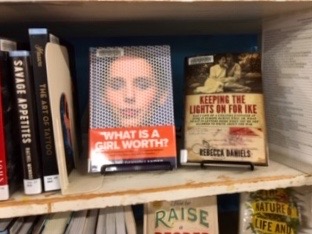
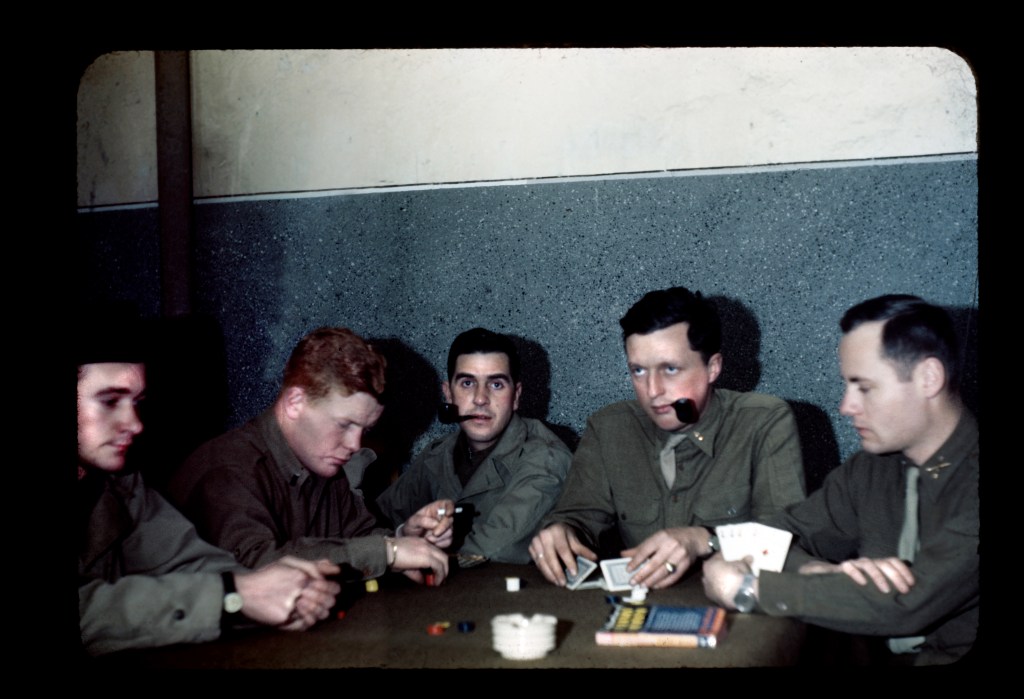
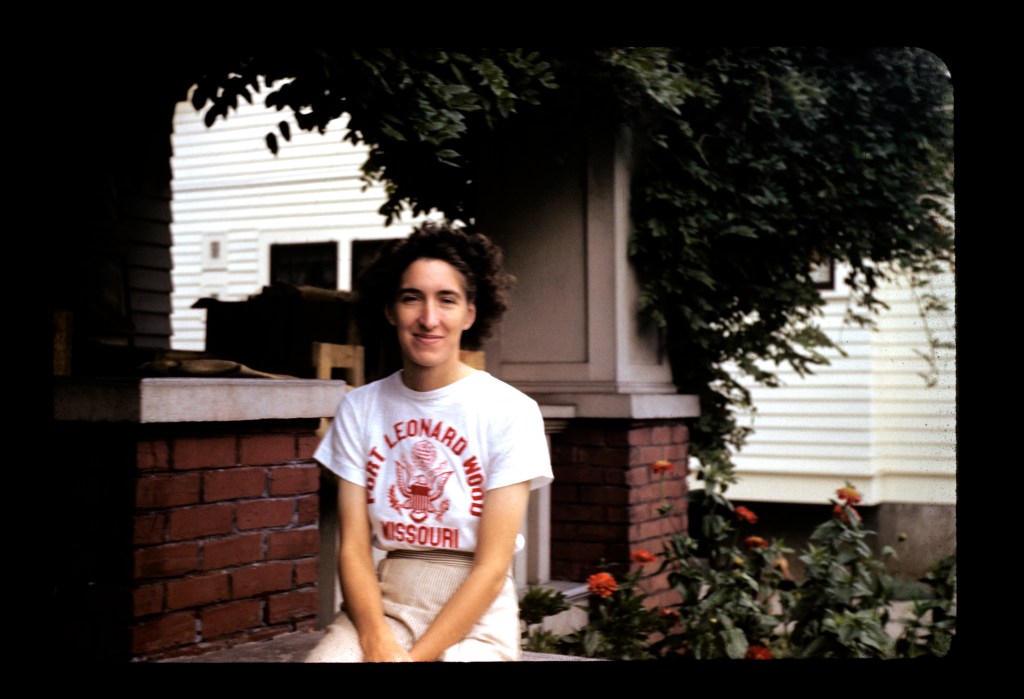
I mentioned in my last newsletter that my 2019 book about my dad’s WWII experiences at AFHQ in Europe had been selected as a finalist for two of the Eric Hoffer Book Awards for 2023 (Legacy Non-Fiction; daVinci Award for Cover Art). In May, I learned that Keeping the Lights on for Ike was the category winner for Legacy Non-Fiction! There’s no cash prize for category winners, but I did get a fancy certificate (below) that I could frame for my office wall…if I still had an office, that is. And for folks who are self-published, there are gold stickers that winners can put on their book covers. My publisher doesn’t do anything about book awards where the author has to pay an entry fee, so any publicity about the award is up to me. I sent out a press release to my local papers, but haven’t seen that any of them ever published info about the win. Still, I feel good about it.
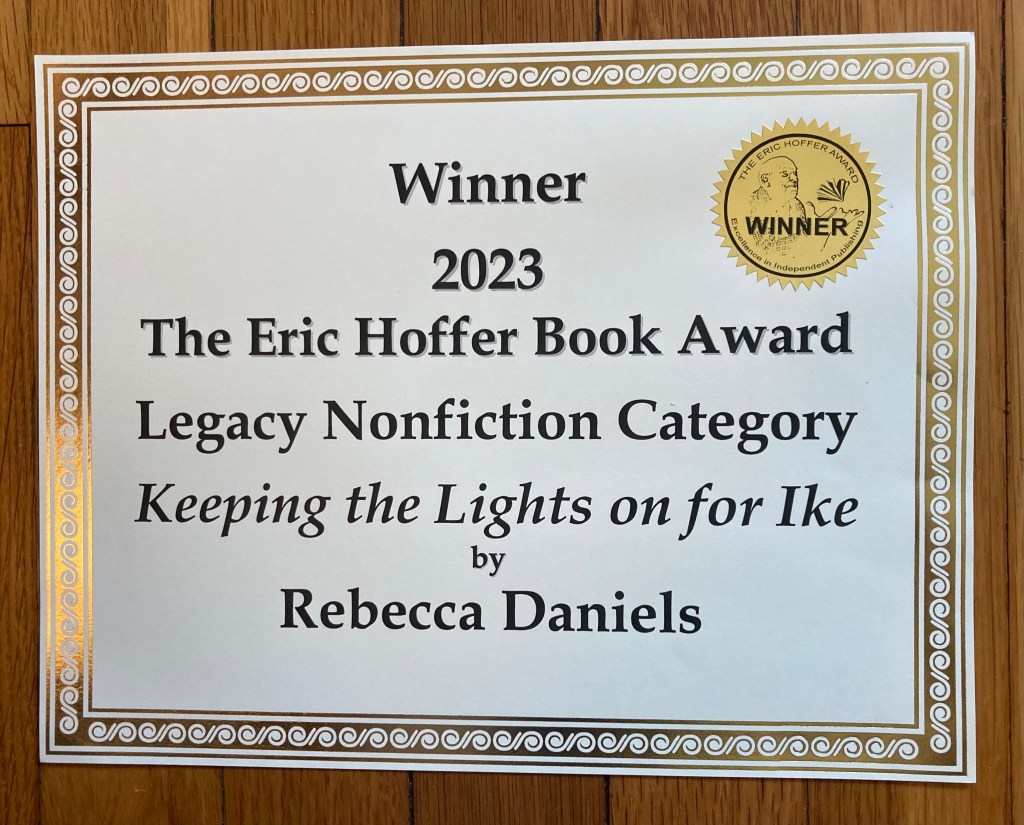
The Hoffer Book Award judges’ had this to say about the Keeping the Lights on for Ike: “It is not your typical book about this era in history. The author gives us an intimate look into the interesting lives of two very private people. The historical documents and photos are a marvelous addition to this book.”
The letters and photos used in the creation of Keeping the Lights on for Ike are now housed in the Library of Congress as part of the Veterans’ History Project. Information can be accessed online here, or viewed in person in the American Folklife Center’s Reading Room located in the Thomas Jefferson Building of the Library of Congress.
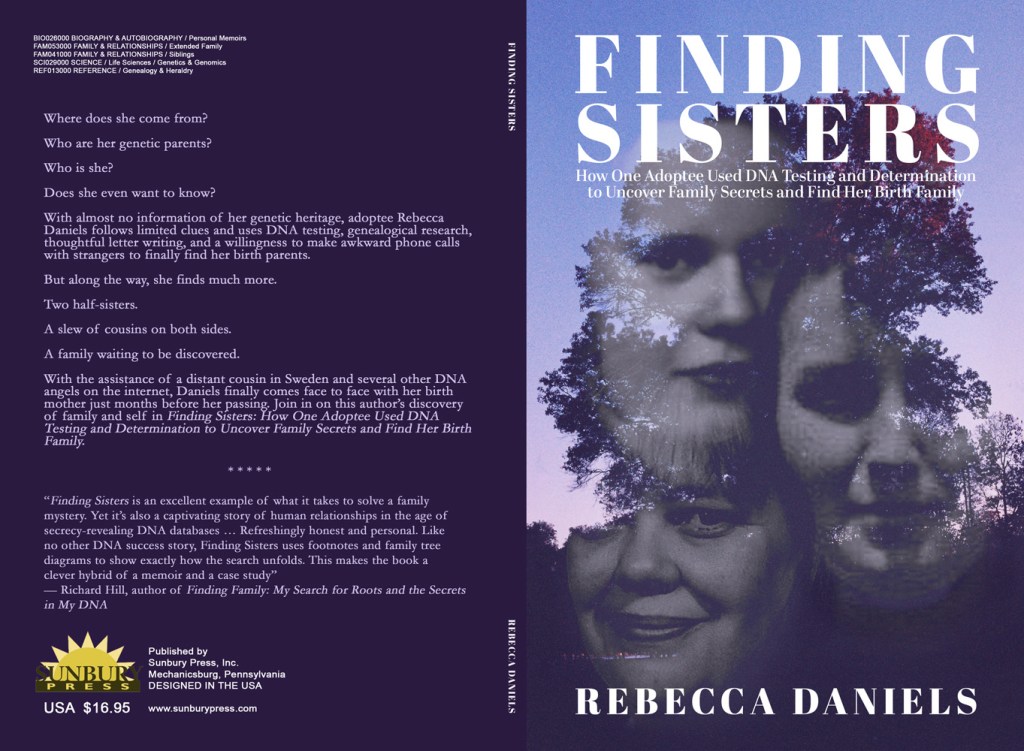
This spring, I also gave two author talks about Finding Sisters, my recent book about finding my genetic family using DNA testing combined with traditional genealogy research. The first talk was an in-person event at one of the local libraries here in Montague, and it was a lovely evening: well attended and with a knowledgeable audience who asked a lots of great questions about my experiences. It was a delight to talk with people face to face for the first time in what feels like a very long time. I also gave a Zoom talk for the Tewksbury Library genealogy group. Tewksbury is a suburb of Boston, so I was glad they wanted an online presentation. If you are interested to hear that talk about the research process, with a short reading of a section from the book (about 40 minutes in length), you can do so here.
What else does an author do while she’s waiting for others to respond to her work? This author gardens!

This year was the second year for my side yard meadow project, so I was excited to see how things might be different this year than last. The first year of the planting had been dominated by annuals, added to the seed mix so there would be some visual interest while the perennials, always slower to flower from seed, got established. That first year was visually dominated by a mix of cornflower and poppies (image above), annuals that reappeared in a few places this year but not nearly in the same numbers as the first year. And there was a tough fight against mile-a-minute vine, but I think we (I had several helpers in the struggle) won that fight because there’s no evidence of the blasted plant this year.
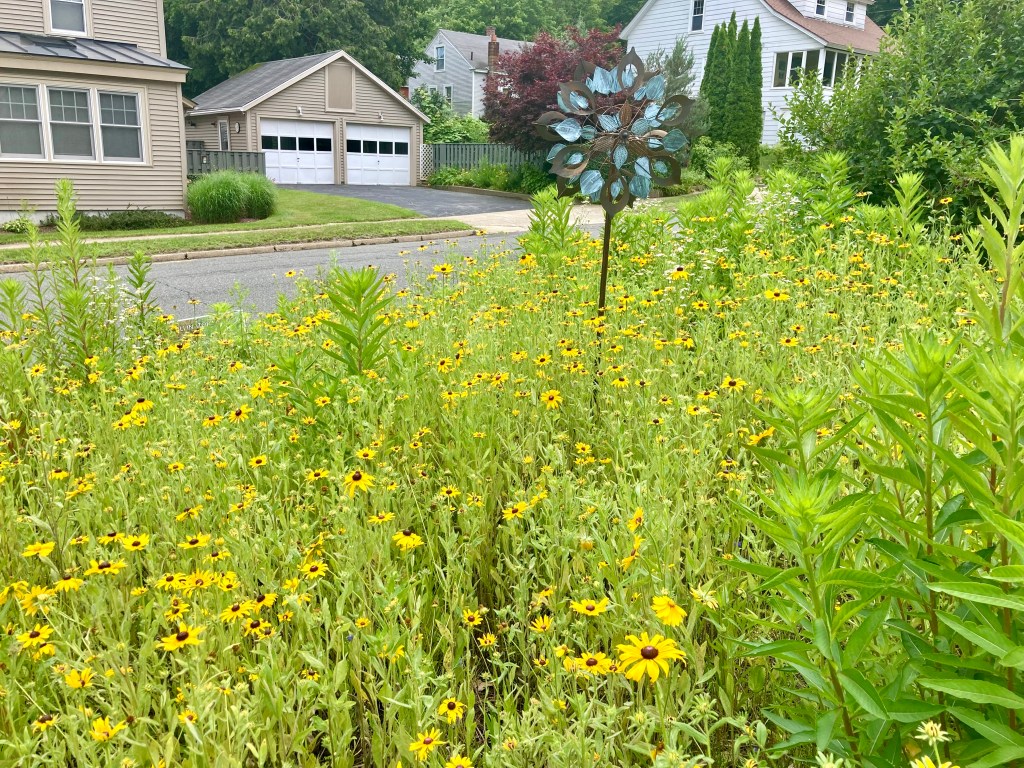
This year, there were some other opportunistic weeds, so the challenge was to pull them out before they could get established, and for that I needed to be able to identify the plants when they were in their early stages before they flowered. Thankfully, there are phone apps I could use to help with that, so I did some spot weeding through the spring in hopes I could just let nature take its course once the desired plants matured. Recently, a couple of the perennials have really come into their own, especially this month as the cheery yellow of the lance-leaf coreopsis and black eyed Susans take over (image above), soon to be joined by another paler yellow beauty, evening primrose.
Next time I write, I really do hope to be in the end-stages of the editing/book design process and perhaps even to have a tentative release date for That Day, And What Came After. In the meantime, enjoy your summer!











 Rebecca Daniels