Winter Revisions, Spring Transitions, and Some Exciting News

(April 7, 2023)

Since I last wrote, Richard and I continued working on our revisions to the script for Weaving Penelope based on all the wonderful feedback we got last year from our actors and audiences involved with the workshop staged readings. We finished the revisions plus all the supplemental materials that would be included with the script (notes to directors, historical references, pronunciation guides, etc.) by the end of February.

We are really pleased with the script and the changes we’ve made, and in early March, we officially submitted it to one small liberal arts university with a terrific theatre program in hopes they will be interested in the possibility of including a full production in a future season in the next couple of years. We have also compiled a list of various other places to submit the script for possible production (other college programs, contests, theatre companies known for producing new work, etc.), so if we hear from the first university that they are unable to do the show, we will already have a backup plan in place. This means the project officially goes on the back burner for a while, and it becomes a waiting game until we hear back about that first proposal.

March was a transition month for me, and I spent it going back through the manuscript for my new memoir, That Day, And What Came After: Finding and Losing the Love of My Life in Six Short Years. I wanted to give it one last look to eliminate any awkward phrases or misspellings I might have missed, so it can be in the best possible shape when it goes to the Sunbury editorial staff. As I went through the manuscript again, I was looking for places to add photo illustrations.

I expect most peoplewouldn’t necessarily think of a grief story as the kind of thing that would have illustrations, but so much of our life together had been photographed that I decided to add some images. So, as I went back through the manuscript, I made notes about photos that could enhance each part of the story and make it more personal. I shared a few last time and wanted to do the same this month as I wait for formal editing to begin

The photos I shared before were mostly of Skip with our grandkids. This time, I’ll focus on some of our trips together. He was a wonderful travel companion, and I called him my “geezer model,” thanks to his willingness to be my photo subject whenever we were on the road.

Our first trip together was a long weekend to Quebec City in 2005. It was our first romantic getaway after becoming a couple. Fellow tourists did us the favor of taking our photo, and we took theirs, too. We were all enjoying the view of the old city with the St. Lawrence River in the distance, from an area around La Citadelle du Québec, which was just a short walk from our hotel.

A year later, while I was on an earned leave from teaching, we took a seven-week drive across Canada, down the west coast of the US (with a stop in Oregon to see friends and family), then into numerous native and national parks in the SW, and eventually headed home across the central US. Skip enjoyed getting to know my brother better when we made our stop in Oregon.
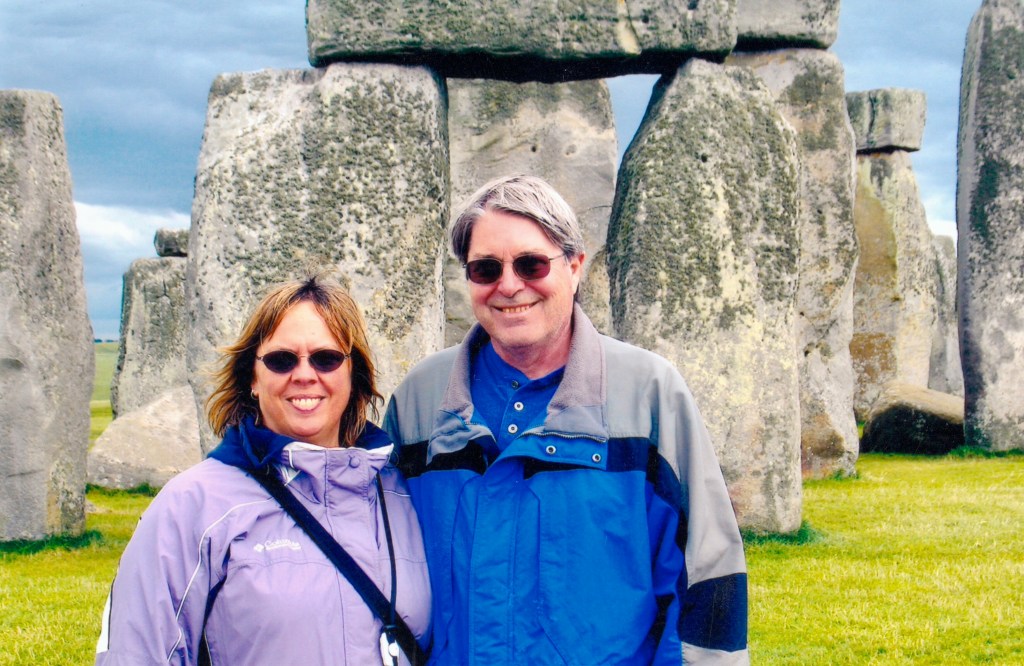
We also had one delightful European adventure in 2008 to visit friends and family abroad and do a bit of sightseeing while we were at it. We started in England where Skip had a cousin, then to France to visit two of my close childhood friends, then to Ireland to meet up with our neighbor and good friend who was renting a house in Dingle for a month. Of course, we couldn’t go to England and not stop to visit Stonehenge.

Whenever possible, Skip went along to my academic conferences and special speaking appearances. In the spring of 2009, he accompanied me to Arlington, VA, for a talk I was invited to give on women stage directors at the Shirlington Public Library. While in the area, we visited many of the monuments and memorials on the mall in Washington, DC. Skip had a high school friend who had been killed in Viet Nam, and he was able to find his name on the Veterans Memorial Wall.

Before I close this newsletter, here’s my exciting news! Last year, I decided to enter Keeping the Lights on for Ike in the “Legacy” category (published more than two years ago) for the Eric Hoffer Book Awards. Last month, I got word that my 2019 book was a finalist for their special da Vinci prize for cover design. My parents deserve recognition as well because it was Dad’s photography and Mom’s scrapbook where she kept that last letter to him during WWII that inspired the cover designer to put them together. The prize itself will be awarded later this spring, but I can officially claim finalist status and use their special seal in my publicity materials for the book from this point forward.

Next time I write, I hope to have a release date for the new grief memoir and be close to the end of the editing and book design phase for That Day, And What Came After.
Editing For My New Book Starts in the Spring; So, What Am I Doing in the Meantime?

(January 3, 2023)

Happy New Year, everyone! I hope you are looking forward to 2023 as much as I am. In my October blog prior to the holidays, I told you that even though I didn’t yet have a specific commitment from the publisher, there was every reason to believe that my newest book would be published soon. I’m now delighted to report that my newest book, a grief memoir called That Day, And What Came After: Finding and Losing the Love of My Life in Six Short Years, has officially been scheduled by my publisher to start the work of editing and design in the second quarter of 2023, which means we’ll get underway in April or May. The last time my editing/design happened in the spring, the book came out in the fall, so I’m presuming this one will be on a similar schedule. So, in addition to the holidays, I was able to celebrate the formal acceptance of my third book with Sunbury Press.

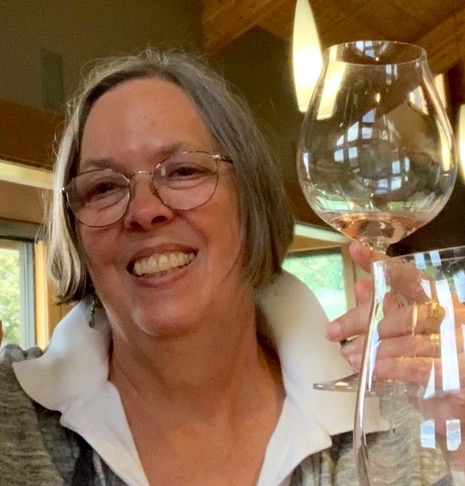
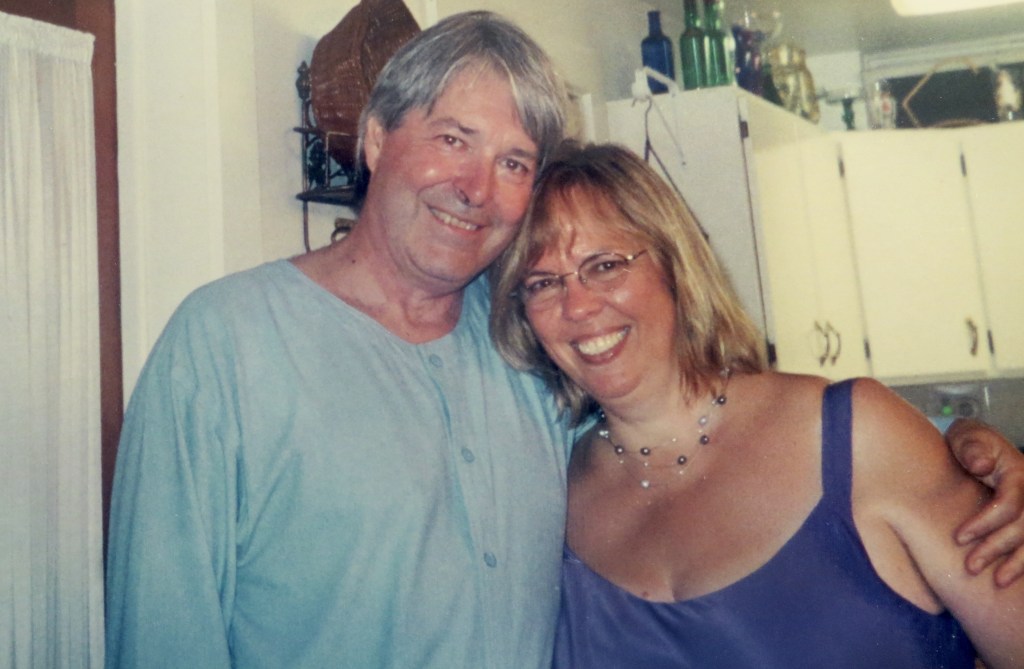
This image was taken the day before the first performance of Weaving Penelope in Oregon and before the good news about the memoir, but it’s the best celebratory photo I’ve taken in ages!

As I mentioned last time, now I will start making some very specific choices for possible illustrations for the book. I know for sure that I will use these photos. The first is the last photo I ever took of Skip, just three days before his death. It was not a happy morning that day because some drunk students had walked by the previous night, presumably on their way home from the bar to their nearby campus (not the university where I was teaching), and one lunkhead thought it might be funny to toss our full recycling bin (on the curb awaiting early morning pickup) through the back window of our car parked in the driveway. Pointless and opportunistic vandalism, pure and simple.

The pictures of the car were originally for insurance purposes, but I’m glad I included him in the frame of one of the photos I took that morning.

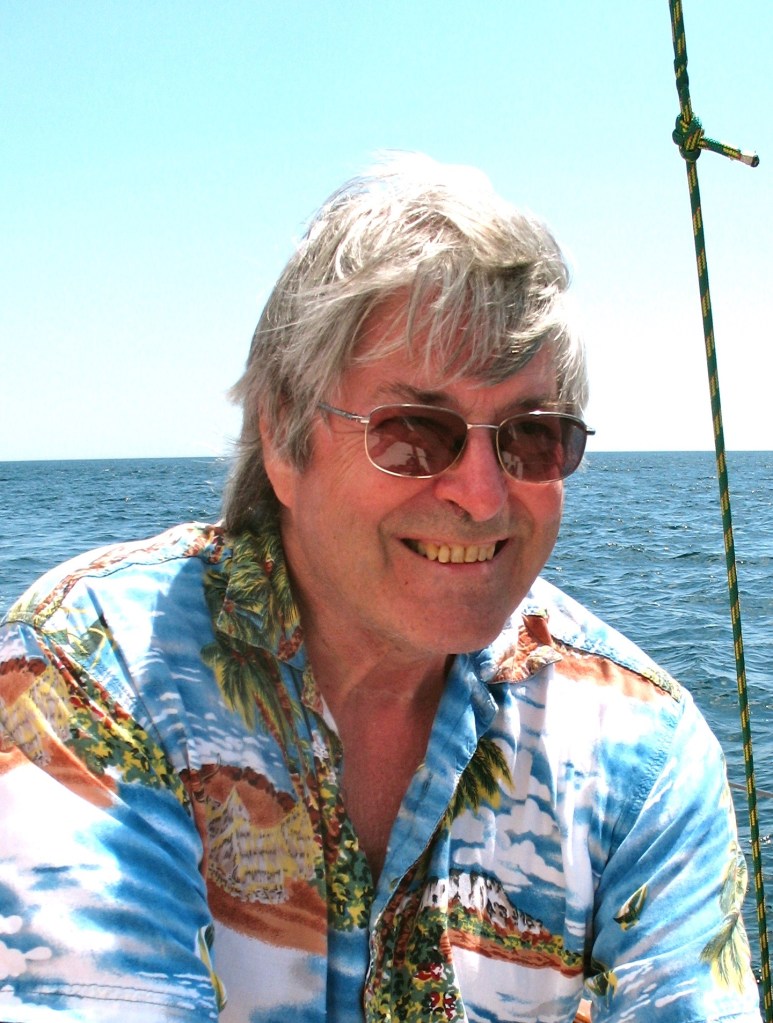
Another photo I know I will include is of Skip during our last vacation, just two months before his death. He loved the area around York Harbor, Maine, a place he had gone often throughout his life and was happy to share with me for the first time. And he love, love, loved being on the water. During that vacation, we took three boat trips in just two days out of Perkins Cove: a lobster boat demo tour, a large racing sloop that took us out onto the ocean some distance from shore, and a small sailboat with only us, the captain, and a handful of other passengers, where we heard the latest story about George Bush, Senior, who had recently grounded his boat in front of his Kennebunkport home, which resulted in his secret service detail taking over piloting when the boats got close to land from that point on.

It’s easy to see that being on the water brought Skip great pleasure.

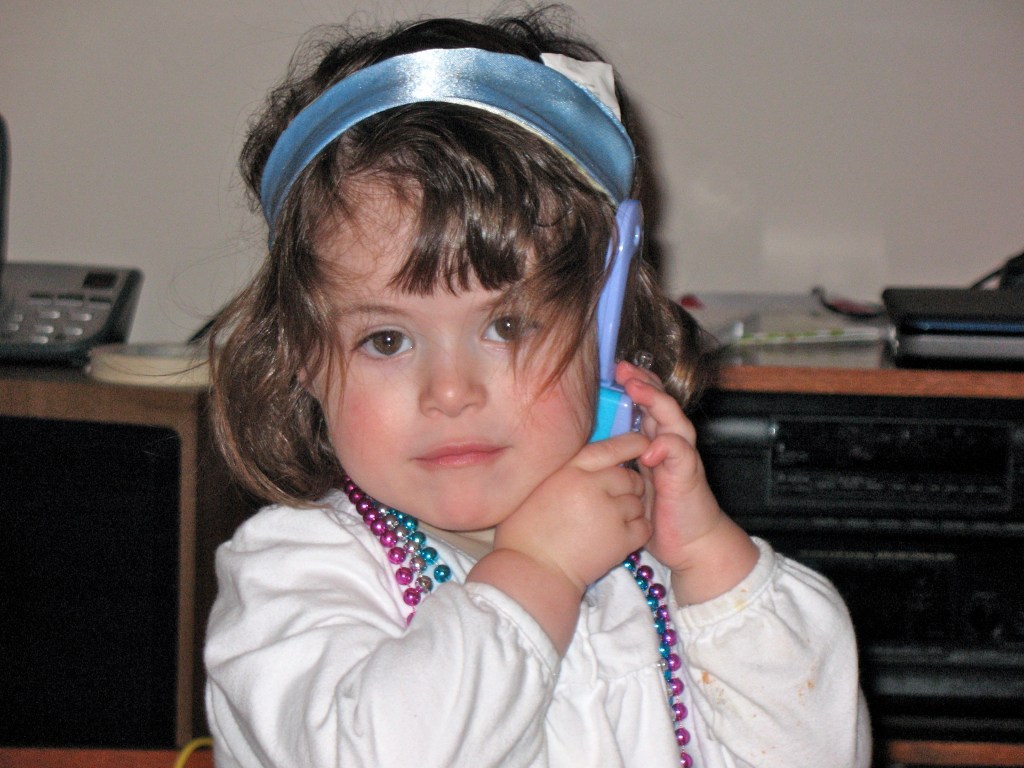
And I’m sure I will include photos of Skip and Maren, his first grandchild. The two of them had a very special sympatico from the moment they laid eyes on each other. Though she was only 3 ½ years old when her “Papa” died, and though they didn’t have a habit of phone conversations while he was living, she continued to talk with him on her plastic phone with a direct line to Heaven for many weeks after he disappeared from her day to day life.

Top photo is from our summer visit in June 2009.

The second is from March 2010 – I suspect she got that phone for Christmas the previous year.

And the second grandchild came just five months before Skip’s sudden death. He doted on that little boy and was looking forward to watching him grow up and teaching him how to play baseball and to be a Red Sox fan. I’m sure he would have been just as devoted to Trenton as he was to Maren, though he never got the chance.

Skip looks both delighted and exhausted. I’m sure he worried about his daughter’s second labor all night before we were able to head to the hospital bright and early in the morning to meet the new arrival.

As I wait for the official editing process to start, I’m still participating regularly in my wonderful women writers’ group, which means that I’m scheduled to present new work every few weeks for the next three months. So, I continue to work on more essays that might become part of a future Mosaic Memoir, even though I have no idea whether they will cohere as a book project or exist as separate essays in the long run. Right now, I’m writing about a series of psychic readings I had in the late 1980s when I was in my mid-to-late 30s and involved in the first serious relationship after my divorce from my first husband. It’s fascinating to me to reflect on those readings and the young woman I was 30 years ago, and I hope I can make it interesting to potential readers as well.

As if that wasn’t enough for me to do in early 2023, Richard and I continue to refine our script for Weaving Penelope in hopes of finding somewhere for a full production in the reasonable near future. We’re almost done!

A New Memoir Submitted; a New Play Performed

(October 5, 2022)

The end of summer and early autumn has been an incredibly busy time for me this year. Earlier this summer, I wrote to you about a play I’d been working on for years, Weaving Penelope, which is the story of the wife of Odysseus and what she did for 20 years while her husband was off having his eponymous adventures. The play alternates between storytelling choral scenes (in the style of Greek theatre, using voice, music, movement, and ritual) with more realistic character interaction scenes. I’m delighted to report that—unlike the Massachusetts workshop which was derailed by Covid just days before the scheduled showcase last June—the Oregon workshop showcase happened as scheduled, thanks to the sponsorship of Keizer Homegrown Theatre (who gave us rehearsal and performance space on their outdoor patio) and Ronni Lacroute (who generously funded stipends for the artists and covered production incidentals for both workshops).

Richard and the cast of Weaving Penelope
 

The Oregon cast (only half the number needed for a full production) did heroic work presenting an “enhanced stage reading” to an invited audience. My co-playwright, Richard Carp, unexpectedly ended up directing the Oregon workshop due to serious medical challenges experienced by the original director. He got first-hand experience working with his own script as director, while I observed his rehearsals in the week before the showcase performance, keeping track of any script changes. Both our experiences were quite useful for continuing script development. Though we solicited actor feedback from both casts, he and I were also able to experience audience responses directly and got terrific constructive feedback from those who attended the talkbacks after each showcase performance. We are working on one more revision that we hope to complete before the holidays. Our next goal will be to secure a full production somewhere in 2023 or 2024, perhaps in a university setting or in a pro/semi-pro theatre company somewhere.

Weaving Penelope onstage during final rehearsals for the workshop showcase

Before going out to Oregon for the last week of rehearsals and the workshop showcase, I submitted the manuscript of what I am calling my “grief memoir,” called That Day, And What Came After. to my publisher Here is a brief book description that I sent with the manuscript:
What if you came home one day and found your husband dead in his favorite chair? This grief memoir explores the author’s experience of the unexpected death of her husband from sudden cardiac arrest a mere three months after his doctors had pronounced him hale and healthy. The author shares details of the couple’s later-in-life courtship and marriage as well as other experiences she has had along the grieving road in the years since becoming a widow.

In our society, we often don’t want to talk or even think about death, so stereotypes about widows exist. However, each person’s grief journey is unique, and sharing tales of those experiences can be helpful and useful for those who find themselves in a similar situation. Though not a self-help book, this memoir is the story of a widow who defied the stereotype that widows are expected to “get over it” and move on with their quiet lives. Instead, this widow “got through it” and is now sharing her journey in hopes of helping others in comparable circumstances.

Our commitment ceremony photo (September 2005)

Though I don’t officially have a contract or a publication target date yet, I’ve been told by someone in the know in the publisher’s office that it’s very rare for them to decide not to publish a second (or in my case a third) book from an author they’ve published in the past. So, I’m hoping I’ll be able to share much more specific good news in the future. Now I need to start making some choices for possible illustrations for the book. I have tons of photos of Skip, who was very photogenic, so the task will be to find the ones that will help illuminate our story together.

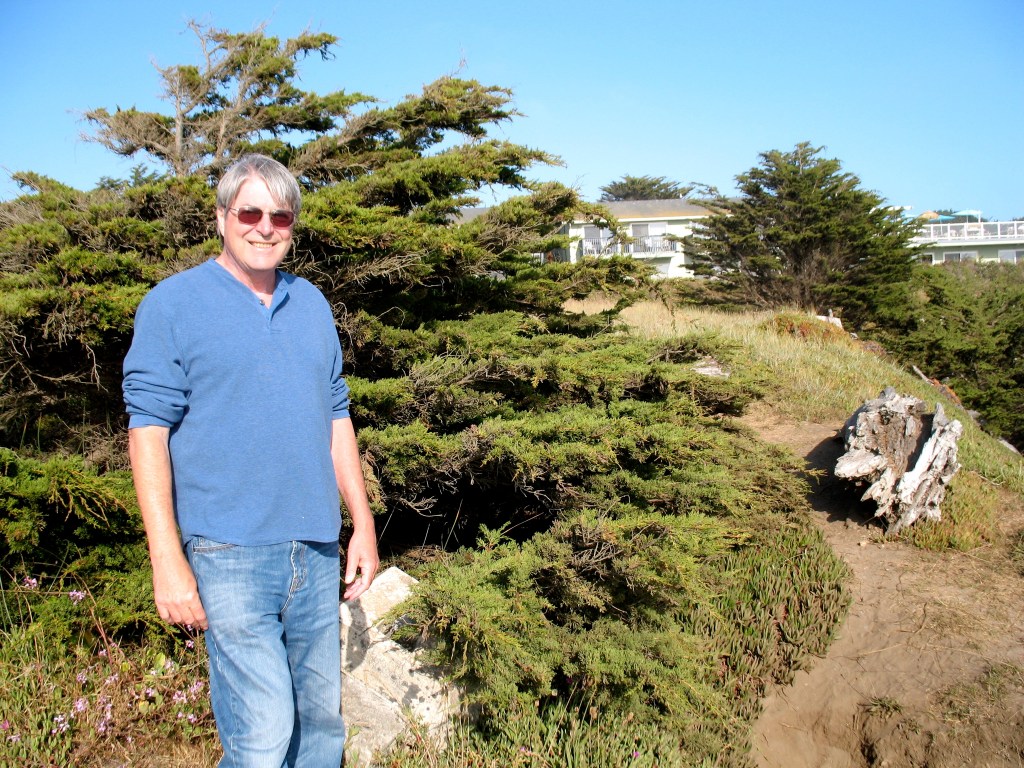
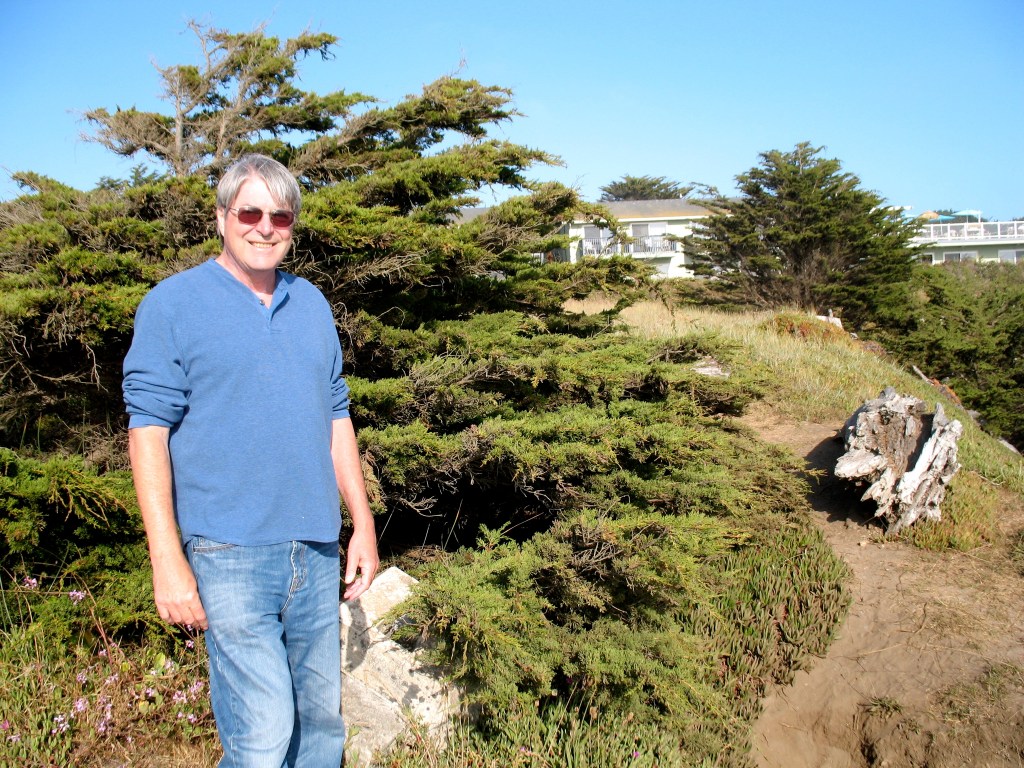
The famous “geezer model” on a trip to the northern California coast (July 2009)

What am I working on next, you ask? That’s a very big question at the moment. I have no concrete ideas for a new book, and I’ve been writing short essays in the meantime, just to keep my creative juices flowing. I identify those essays as part of my Mosaic Memoir, but I have no idea whether they will cohere as a book project or simply live as separate essays. My next concrete writing task, however, is to start working on the “matter” (details and insights that will become useful for publicity and marketing once the book is published), so I’ll be ready when Sunbury gives me a publication date and assigns an editor.

Finding Sisters Isn’t the Only Thing I’ve Been Focusing On in 2022

(July 4, 2022)

Since I last wrote in early March about the virtual book tour I’d just completed for Finding Sisters, lots has been happening for me on the writing front. The first news is that the audiobook version of Keeping the Lights on for Ike finally came out last month! Though the initial recordings were completed in November of 2020, various complications, including a shift in personnel dealing with the project, a few technical glitches, and some general lack of communication between Amazon and Sunbury during the pandemic slowed things down, but as of June 9th, the Audible version of Keeping the Lights on for Ike, read by yours truly, is now on sale. There will also be an audiobook version of Finding Sisters, but Sunbury has now engaged a new company to coordinate their audiobooks, so it won’t be read by me (in spite of the fact that I did voiceover work back in the day when I was still occasionally working as an actor), but I’ll be sure to let everyone know when that one comes out as well.

The link in this screenshot image is not live, but you can check out a sample of the audiobook here:

In May and June, I spent most of my time focusing on a playwriting project that has been on my radar for many years. Weaving Penelope, written with my old friend and theatre colleague, Richard Carp, is a play exploring the mostly untold story about the wife of Odysseus, who ruled her husband’s kingdom while he was away fighting the Trojan War—and having other adventures—for 20 years. It imagines Penelope’s experiences and expands on scenes from Homer’s Odyssey. The play nods to some Greek theatre conventions, including the use of a chorus of players who narrate the story and out of which all characters—except Penelope—emerge. Richard and I had been working on the play for well over a decade, only completing it once we had both retired from teaching and academic administration. We had a very successful Zoom reading in the spring of 2021 with participants in four states, and in 2022, thanks to the sponsorship of Keizer Homegrown Theatre (KHT) who gave us a fiscal umbrella and an Oregon theatre facility to use, and the generous patronage of Ronni Lacroute (supporter of the arts extraordinaire), we scheduled two in-person workshops with directors and actors to further explore the play on its feet: one outdoors at a private residence in western Massachusetts in June and another at the KHT courtyard performance space in September. Unfortunately, in spite of all our careful rehearsal protocols and regular testing, Covid—plus a death in the family of another cast member—cancelled our showcase performance in Massachusetts. Though we weren’t able to get audience reaction to a performance, we were able to get some very valuable feedback about working with the script from the actors in the ensemble, and we are doing some minor adjustments to the script this summer, before rehearsals begin for the coming Oregon showcase.

This is the image we used on our audition announcements for the Massachusetts workshop.

In the middle of all this other excitement, I have been working slowly but surely on my grief memoir. I started writing it in 2017 (seven years after my husband’s sudden death but the first time I could articulate coherent thoughts about what I wanted/needed to say about that event and the effect it has had on my life), and the manuscript, called That Day, And What Came After: Finding and Losing the Love of My Life in Six Short Years, is almost ready to propose to my publisher. The narrative starts with the day Skip died, takes the reader through the first month of my widowhood, including his funeral, burial, a memorial event at our house, and my struggle to find a new path for my life, and then jumps back to the beginning of our relationship and details the life we were building together after our late-in-life marriage. In addition to the more traditional relationship narrative, I had also written several short essays about particular challenges I encountered “Along the Grieving Road” and curated some of the entries in my grief journal to share with readers. Every word of this memoir has been shared over the past several years with my wonderful women writers’ group, and they have given me some terrific advice on the text, which has now been revised several times. This spring, the big challenge for me was to find a structure for the memoir that would allow me to include all these disparate parts in a single, coherent whole. Thanks to my former employer, St. Lawrence University, and their generous research support for emeritus faculty, I was able to hire the professional editor who facilitates the writing group and already knew the work to work with me directly on structural issues. Now I’m in the process of reworking some of the shorter pieces and the journal selections and hope to finish the final manuscript before summer is over.

This is one of my favorite photos of Skip (aka the geezer model), taken about sixteen months before he died.

Though Sunbury Press has already published two of my books, they do not automatically accept new work from their authors without vetting each manuscript, so I will be going through an application process, just as I did with Keeping the Lights on for Ike and Finding Sisters. I hope to be ready to start that process in August. Keep your fingers crossed for me!

What to Do With a Mosaic Memoir?

(January 19, 2021)

Last month, I promised to write a bit more about my “mosaic memoir” process, but first a quick update about editorial work on Finding Sisters. I’m still inching up the queue, and I’ve learned a lot about the process for the editorial staff at Sunbury Press. The “waiting to be assigned” queue isn’t necessarily a linear progression, as I had first imagined. Each editor works on multiple manuscripts of different lengths at any given time (some being assigned more projects than others, depending on their status as full or part time editors), and while Sunbury has a wide variety of imprints (from young adult fiction to literary and historical fiction to fantasy/horror to self-help books and more) as well as their primary focus on non-fiction manuscripts of all kinds, their editors do not seem to specialize in one genre of book over another. This means that the time needed to edit each manuscript can vary wildly. It’s also possible that occasionally the head of the company might pull a manuscript on a particularly “hot topic” (such as books related to the pandemic) out of the queue and advance it to the head of the line. Though there are still only a handful of books ahead of mine in the “to be assigned” queue, there’s really no way of telling when the editing process might start for me.

I’ll share that process with you when it happens, but it’s hard to know for sure when that might occur. So, in the meantime, I’ll explain more about the essays that make up what I was calling a “mosaic memoir” in my post last month. Due to a really interesting exercise suggested by the facilitator of my writing group, I discovered something surprising about those essays. The directive was to give a working title and subtitle to the projects (mostly memoirs) we were each working on, with the goal of telegraphing to our reading audience the main topic or theme of our manuscript in progress. In other words, “what’s my story about?” Members of the writing group shared our titles at our last Zoom meeting before our holiday hiatus.

The first step for me in preparing for the exercise was to list and characterize each of the 14 essays I’d drafted so far for the mosaic memoir project, and in doing so, I discovered that the essays were evenly split in type and that there was no way to give the current collection of essays a single title. There were actually two books in progress! Not only that, I was able to list several new essays/chapters that I want to write for each project. Exciting stuff.

The first thing I realized was that I had written more than I had realized about my late-in-life second marriage, including my husband’s unexpected death from sudden cardiac arrest just months after being pronounced totally healthy by his doctors. That has now become a different project for me. It will become a much more traditional memoir and, like the story in Finding Sisters, will cover a specific time in my life (2004-present). It will have anecdotal information that anyone on a similar grief journey might find useful, but it will not be a self-help book. Instead, it will be the story of those years in my life, my interactions with my husband, and the people and actions that helped me to survive and eventually even thrive again after his death. I’ve given it a working title of Adventures with the Bartender: Finding and Losing the Love of My Life in Six Short Years. For those who don’t know, my husband owned and ran a small Adirondack hotel for seven years and loved to serve drinks to guests in our house, especially when we had parties, thus earning himself the nickname “The Bartender” among our friends. He earned another nickname, “The Geezer Model,” because of his good-natured indulgence of me and my camera when I wanted to take his picture, which was often, especially when we were traveling.

The Geezer Model on a hillside above the beach in northern California (July 2009)

For those who let me know after last month’s blog about their interest in the concept of the mosaic memoir, I want to reassure you that project is still very much a reality, though likely a lower priority at the moment than the new memoir about my widow journey. One close friend wrote me a note after learning about my mosaic memoir idea telling me she heartily approved and sharing information about an early 20th century Italian poet, Cesare Pavese (1908-1950), who famously said, “We do not remember days, we remember moments.” A former student who now teaches and performs internationally loved the idea of a mosaic memoir, and he explained to me, “Mosaic is my favorite content-process metaphor. In all my classrooms and performances, I always tell students/audiences: ‘Don’t look for a thread, we’re not following anything, keep your eyes in soft focus, the picture will begin to emerge eventually.’” And that’s exactly the point of this second project with the current working title, Mosaic Memoir: Snapshots of My Life. Though I have seven essays already written about various threads or snapshots that are important in my life, and at least four more I want to write, there’s no obvious narrative through-line. At least, not yet. These essays cover various times and experiences in my life and have current working titles like “Tomboy,” “Like Mother Like Daughter,” “Losing my Voice,” and “Brothers of the Heart” (with “Sisters of the Heart” soon to come), among others.

There’s certainly no lack of writing topics for me, and I’m sure these projects will keep me busy for many months to come. For anyone who worries that they might not have enough to say to write a memoir, I suggest you might try the mosaic approach. It’s amazing what comes up in one’s memory to write about when there’s no pressure to have a specific structural plan for a book!

For my next entry, I hope to be able to report on the start of my editing process for Finding Sisters, but I’m not holding my breath. In any case, I’m sure I’ll find something interesting to share with all of you about my two newest projects.

Finding A Way To Share My DNA Journey With Others

(October 18, 2020)

The field of genetic genealogy is a fascinating one, but it can also be complex and confusing, especially for those just getting started, many of whom would likely be my readers when my newest book, Finding Sisters, gets published. I was still just barely more than a novice myself when I started the project, though I eventually found what I was looking for (with lots of generous assistance from others more experienced than I), and I wanted to share that story with others in a way that would encourage them to get involved in their own genetic history while not downplaying the complexities of the journey or throwing the shade of discouragement on anyone who felt confused by all the details that are a necessary part of the search for genetic ancestry.

Because mine was a story with a clear beginning, middle, and end, I started to write about the details in chronological order, and because I had been saving absolutely everything from the very beginning of my explorations (emails, documents, photos, notes from conversations, relationship charts, family trees, etc.), this meant going back over what had happened along the way in minute detail. This kept me honest about what had taken place and when, and it was also a great way to refresh my own memory about how everything had unfolded. In the excitement of the discovery process, it had been easy to conflate the details, to mix up how and when certain things had occurred, and to forget certain important elements of the story.

As I started to present the developing chapters to the women in my writing group, two issues became very clear. First, the scientific details and all the family names were confusing to someone who was not directly engaged in the search, even when they were interested in the story. I was fascinated with what I was discovering, but my audience was mostly just bewildered and kept losing the narrative thread. This was the proverbial problem of not being able to see the forest for all the trees. One of the first things I needed to do, then, was to limit my use of the technical language in the story itself (footnotes became my good friend, so I could include the technical details for those who might want them but without impeding the narrative through line). Another was to consider visual aids in the form of relationship charts and/or developing family trees at various points in the story to help the reader understand the intricate web of relationships that was unfolding.


This is what I eventually discovered about my birth mother, her relationships with various men, and her other children, my maternal half-siblings, two of whom were deceased long before I knew who they were. Because the file is a pdf, which is not supported as an available image in WordPress, this is a screenshot of the file that will become an illustration in the book itself.

The other complexity was the incredible number of names involved in a genealogical research project. If anyone has ever done a family tree for the family members they already know about, it’s crammed with surnames, often different within every generation due to marriages, blended families, and the like. And for the adoptee, this is even more complicated because all the family names we might know from our own growing up usually have nothing at all to do with those in our genetic lineage. As well, some of my extended genetic family members were not interested in being linked to me, the illegitimate outsider, according to some friendlier folks I encountered along the way. I solved this twofold problem by eliminating surnames in the story I was telling. Most people can easily keep track of multiple characters by first names, so that’s the route I chose to write about my genetic families on both sides, maternal and paternal. According to the ever-astute members of my writing group, not knowing the surnames did not distract from the primary account of finding my two living half-sisters and sharing more about the family backgrounds of both my genetic parents.

As I continued to share my experiences with the writing group, it became clear that the story was just as much about my developing relationship with my Swedish search angel, Thomas, as it was about my genetic family. Thomas was distant part of that family (a maternal sixth cousin as it turned out), but that didn’t become clear until well into the adventure. So instead of simply being a friendly technical facilitator for my unfolding narrative, Thomas eventually became a fully fleshed out character (as full as possible for someone you’ve never met in person, that is) and an important part of the story.

One of the other things that those who heard my story along the way valued was the occasional photo that had come my way from extended family members or other sources. These photos helped my audience to define and identify with my genetic parents and other family members. Because I had her name early in the search process, I was able to get her photo from my birth mother’s high school yearbook, and once I contacted members of her family, finding other photos was simple because they were happy to share. Finding images of my birth father was much more difficult, especially since his name was one of the last ones I was able to uncover. But once the connection had been confirmed, extended family members were pleased to be able to share the images they had with me, though because he had died so young, there weren’t too many of them available. The photos below are what my parents would have looked like in the summer of 1948 when I was conceived while they were dating.

Glenna’s senior picture from her high school yearbook
A photo taken when Bud was in the Army in Labrador, age 19

I presented my chapters to the writing group two separate times over the nearly two years that I worked on the manuscript: first drafts and then, after addressing the first set of comments, I shared the revised drafts a second time, which gave me a chance to revise a second time. All these revisions took place before I submitted the manuscript to the publisher for a possible contract, which happened just a month before the covid-19 shutdown in March 2020, and I signed my contract with the publisher in May. At the moment, I’m still sitting in the queue of books to be edited at Sunbury Press, but I expect to start working with the editor they will assign to me when I get to the head of the line fairly soon.

In the meantime, I’m working on recording the audiobook version of Keeping the Lights on for Ike and working on new writing. So, what’s next for this writer? Perhaps a more traditional memoir is in store. I’ll write about that next time. And hopefully about the process of working with my editor on Finding Sisters.

How the Journey Unfolded

(August 24, 2020)

Last month I promised to share some info about how my journey into genetic genealogy got started. Back in 2014, I didn’t know that term existed, much less what it really meant. But once I’d done a DNA test out of a curiosity to know more about my own genetic background (I had been adopted at birth), and when a distant cousin with expertise in building family histories had contacted me to talk about our family connections and to help me put all the pieces together, things started to move really fast. In fact, within a few days of contacting me in the spring of 2015, this cousin (my search angel) had all kinds of ideas for how he could help me find my birth mother from the single clue I had. Our email correspondence was detailed and voluminous, and of course I saved it all because I wanted to be clear about everything he was saying, though at the time I had no ambitions other than wanting to remember everything he was telling me and teaching me about genealogy research and about interpreting DNA test results. It was all happening so fast that I had to reread messages with some regularity to keep up with the ideas and leads I was being given.

I won’t give you the play by play of what happened on my journey into the work of genetic genealogy (that’s what the new book does), but I will say that before the end of 2015, I was able to connect with and meet my birth mother and maternal half-sister in person, to confirm the relationship with my birth mother via DNA testing, and to hear some of the story of how and why I was given up for adoption when she had a child out of wedlock just a few weeks before her 20th birthday. I also discovered what happened to her in the years following my birth and learned I had three maternal half siblings, though one had died in infancy and another was deceased some years before I came on the scene. To say I couldn’t have done it without my search angel cousin would be an extreme understatement. This distant cousin was incredibly helpful and taught me an enormous amount about how DNA testing works and how it can be interpreted and used to connect various family members.

Meeting my birth mother in September 2015

After the first excitement of meeting my mother and sister, the trail went cold on finding my genetic father because my mother, in her middle 80s when I met her, was struggling with dementia. My maternal half-sister, April, was incredibly helpful in our conversations and very supportive of my search, but my mother could no longer remember the name of the man she’d been dating and who’d gotten her pregnant in the summer of 1948; it made her cry every time we tried to ask new questions about him. She remembered that he was a pilot, though she never “went up” with him and wasn’t certain what kind of planes he flew, and that they met at a dance, but that was about all. She died only a few months after I met her, but whatever she had known about my father was mostly gone even before she passed, which made me sad, not so much because I needed to know but because it made her so sad. And since birth certificates in that day didn’t include the name of the child’s father unless the couple was married, there was no paper trail on him, either, even when I finally did get a copy of my pre-adoption birth certificate. I learned through newly discovered relatives who knew the family history that my birth mother had herself been an adoptee, so another layer of mystery was added that would eventually have to be explored to get the whole story.

My birth mother, maternal half-sister, and me in September 2015.

After this flurry of initial excitement, nothing at all happened for another year to help me get closer to any information about my mysterious birth father. Actually, I think that’s the rhythm of genetic genealogy: hurry up and wait; hurry up and wait. Then out of the blue, a surprise genetic match popped up for a close relative, a paternal half-sister who didn’t match with my mother. She had also been born out of wedlock and subsequently adopted, and I discovered that my mother wasn’t the only girl this guy got pregnant during the summer of 1948 because I’m only four days older than this sister! I’m not a person who keeps journals, but I was keeping every single email message that I sent or received that had anything to do with my search for genetic relatives (thank heavens for email folder systems!), and this new development got me thinking that there might be a larger story to write someday. It took almost another year before I was able to meet this other new half-sister in person, and we had little luck in finding serious candidates for our genetic father because neither of our birth mothers would (or perhaps could) reveal his name. Finally, we decided to both take a new DNA test with a second provider (DNA testing services don’t share their data with other testing services) and different matches that we shared started to surface in this new database that eventually would lead us to the man we had started calling Mr. X.

Me with my newest half-sister, Ann

It took us several more months to communicate with these new matches, to get the potential relationship sorted out in our heads, and eventually to find possible relatives who were willing to take a DNA test at our expense before we were able to find enough close relatives that we became quite sure of who our father had been. Unfortunately, our Mr. X had died in a crash piloting his own small plane during a heavy fog just days before his wedding and before either of his illegitimate daughters had turned two years old. We suspect he never knew about either of us.

Eventually, I also found a likely candidate for my genetic grandfather through multiple DNA matches in a different clan, matches that my paternal half-sister did not share. So now the challenge became how to tell this rather remarkable story in a way that other people would be interested. That’s what I’ll write about next month. Enjoy the rest of the summer.

So, What’s Next?

(July 10, 2020)

Due to heat, humidity, and an out-of-control pandemic (at least it seems so in the US), this entry will be a bit shorter than usual. And I’ve got almost no illustrations to share at this point. Just my thoughts. Hopefully you will enjoy it anyway.

So, when you are deep in the throes of writing a book that has been your obsession for the past decade, still working full time, and you are starting to adjust to widowhood, living alone, and finally starting to feel quasi-normal, what might you do in your spare time when you find some? DNA testing is not the first activity that might come to mind, but it’s something a friend talked me into doing in early 2014 while I was deep in the research, transcription, and early writing for Keeping the Lights on for Ike. At first, not much happened once my DNA sample was in the database. Oh, there were lots of distant relatives, but when you don’t really know anything about family names or possible biological connections, it’s more confusing than helpful to see all those names as third, fourth, fifth, or even more distant cousins. And since I had almost no real clues about my genetic parentage, there was nothing there that got me excited, at least not yet. Another year passed. Research and transcription work on the WWII book was nearing completion, and the book itself was getting closer to having a real shape and focus, which definitely gave me something to write about regularly. But then in early 2015, a distant cousin contacted me, and my serious genealogical searching kicked into high gear, at the same time as the other book started to take off in my mind.

I suppose all writers have this problem at some level or another: one book/essay/play/poem/story/whatever is in active process and taking most of one’s creative focus, and another is just at the germination stage in one’s mind, though it’s alive and cooking and starting to become “something,” whatever that might be. This dual consciousness is an interesting place to be, that’s for sure. The correspondence between me and my “cousin” (the exact relationship wasn’t yet clear, since I knew so little about my own beginnings, but he already had some theories) was active and exciting, but the only thing I could do, given my goals for the WWII book, was to respond to all the new info coming in via email and to start a file of all this unexpected information that was coming in fast and furious, thanks to the genealogical expertise of this new cousin.

I don’t know about other writers, but I have both electronic and paper files for LOTS of different experiences and ideas, some of which have become published or performed work, and some of which have never seen the light on day since first being written down and saved. In fact, in spite of paring down considerably when I retired from full time teaching, I still have more paper files in my house than many folks I know. In response to this fascinating new info, I started keeping genealogy files in my filing cabinet and on my computer, though at this point, I was mostly the recipient of information, not the generator of it. But things were about to change dramatically, and that’s exactly what my new book, Finding Sisters, is all about.

Next month, I’ll share a bit more about how my genealogy journey unfolded and what it was like to start writing, not about my adoptive parents, but about the search for my genetic ones.

The End of One Phase and Start of Another

(June 1, 2020)

I had been warned when I submitted my proposal in September that it could take up to six months before Sunbury Press would make their decision, so I knew I needed to focus on another writing project for a while. For the remainder of 2017, I worked on the chapters that would eventually become my next book, Finding Sisters. There will be more about that soon, but for now I’ll skip to the next important step that happened for Keeping the Lights on for Ike.

In early 2018, my former employer, St. Lawrence University, announced that the university president had made some funding available to emeritus professors (like me) for special research or creative projects they were still occupied with after their retirement from teaching. They encouraged me to think about how a small grant might support what I was currently working on, and I did not hesitate. I wanted to hire a consultant for editorial assistance to strengthen the manuscript currently in the proposal pipeline with Sunbury. I talked with the perceptive facilitator of my women writers’ group, a professional editor by trade, about her availability and willingness if my grant application was successful. She already knew each of the chapters I had written—they had all been discussed by the writing group at least once and sometimes twice—and it would definitely be a worthwhile endeavor to have her take a look at the manuscript as a whole. She agreed, and the grant proposal was on its way within days of getting the announcement.

By early March, my grant request had been approved, and because it was now close to six months since I’d sent in my proposal, I felt the grant would be the perfect opportunity to inform Sunbury about the good news while also asking about the status of my proposal. So, I did both and discovered that somehow my proposal had “fallen through the cracks,” they were happy to hear from me again, and someone would be in touch soon. In fact, almost immediately I got a message from the founder and CEO of this small press, asking me if the manuscript was still available.

One of the proposed illustrations for the book

Needless to say, I returned his message immediately with a positive response and a copy of the manuscript. A few days later, I got the message that Sunbury wanted to publish my book and a contract would be in the mail to me very soon. While I’m not advocating nagging publishers about your proposals, I am saying that it never hurts to connect with them once their published time frame for response is getting close or has passed with no word. And sometimes it helps.

By May 1, 2018, I had signed and returned my contract and set to work with my consultant on fine-tuning the overall shape of the manuscript; I was determined to do one last revision pass to get things in the best shape possible before my manuscript would be assigned to a Sunbury editor. Over the summer, I worked on revisions suggested by my consultant (a luxury not every author has and for which I’ll always be grateful to St. Lawrence’s generous faculty support policies, even after we’ve retired). I contacted Sunbury’s senior editor in July to be sure I understood all the necessary protocols regarding required manuscript format and citation formatting, as well as to get a sense of exactly when they would want me to be ready to start work with their editor. Contractually, I had until November 1, 2018, to provide my materials, but I wanted to let her know I was going to be ready far in advance of that deadline. She told me I was approaching the head of the queue to be assigned an editor, and that it would be a matter of only a few weeks before I would be contacted by my editor.

In mid-August, I met my editor online, and she went over procedures for our work process together. There were going to be two editing passes through the manuscript (one with her and one with the senior editor) before it went to the book designer for formatting, and I would have lots of agency in the process. Any suggested revisions that I was confused about or disagreed with were discussed in detail, and I’m delighted to say that I had a really great working relationship with my both my editors, even though I’ve never seen their faces (other than photos on the website) because all our interactions were text-based. For the next five months, I worked with my editors to get the book ready for publication, and when I started work on the formatting with my book designer, I was thrilled to discover that there were very few limits on the number of illustrations I could provide.

From Mom’s scrapbook: the last letter she sent overseas, returned because he was already on his way home.

This was something that had concerned me after the proposal had been accepted because I had so many fascinating images available to me and was hoping I wouldn’t have to pick my top ten or twenty images for a centerfold illustration section like ones I had seen in many other non-fiction books. I was delighted to discover that the only limit imposed was that though many of the images were originally in color (they had been slides), for the book they would have to be black and white due to cost considerations. I was also told to be sure there were not more than a dozen images per chapter…not a dozen in all, but a dozen for each chapter!

I worked with a terrific graphic designer on the book cover. The only thing I knew for sure when he asked me if I had anything in mind for the cover was that I wanted to use some of the images that would end up inside the book on its cover. When I gave him a small collection of possible images to use and a quick summary of the book’s contents, he was the one who came up with the design that combined a photo of my parents from Dad’s basic training time in the early months of the war with a copy of the envelope from the last letter Mom sent to him overseas. The letter had been returned to her when he was on his way home from Europe, and she had put it in her scrapbook. (The image you see above in this blog is a companion image to the one that ended up on the book cover, and they are both included in the book itself.)

By the end of January 2019, after much back and forth, everything had finally been approved by all involved, and the book was ready for publication. Keeping the Lights on for Ike was released in February 2019. When it came the time to publicize the book, I discovered that small independent presses count on their authors to get more actively involved in those promotional efforts than academic presses do. Next week, I’ll tell you all about how involved I got as well as all the stimulating new developments happening this summer. Yes, I said next week. I’m making an exception to my original once-a-month-publication plan because there so much excitement going on right now.

So, It’s All Organized; Now What?

(April 30, 2020)

I wrote earlier about how my mother’s death stalled my work on the letter transcripts, both physically and emotionally speaking, but I did get back to them about a year later. However, a return to my full-time teaching job after sabbatical, plus the responsibility of directing a play each year with my students, meant my progress was slow. I managed to finish the transcripts and interlaced them with the research chronology of the war in Europe, especially North Africa and Italy, which took about 18 months, and I was just starting to think about how to present the material in another medium, when another road block slammed me. Hard. My husband died unexpectedly of sudden cardiac arrest, just a few months after being pronounced in excellent shape at his annual medical checkups. This shook my life in ways that I won’t go into here, but it was definitely not conducive to research or writing for several years after that.

Finally, the time came for me to retire from teaching, and following the plan my husband and I had made together long before his death, I moved to western Massachusetts to be nearer to our grandchildren. Once settled there, and with plenty of time on my hands, I was now ready to take on the letters project once again. The first thing I did was to re-read the document I had created that combined the letter transcripts and the wartime chronology. At first, I was looking for ways to create a theatrical event, but after re-reading everything, I realized that there was no true dramatic action to be found. Yes, it was a dramatic time in our country’s history, but there was no conflict in my parents’ relationship, other than the separation created by my father’s wartime assignments overseas. I also came to the realization that the letter contents required too much reading between the lines, so to speak. They were nuanced and delicate, and there was a serious love story involved, one that I knew little about until reading those letters. I started thinking of it a quasi-memoir, and my first working title for the book was The War: A Love Story.

This was a disappointment in some ways but a relief in others. Being free of the theatrical constraints of some measure of realism (for I could not imagine doing the letter texts any other way), I could add a narrator’s voice to the story to explore my mother’s side of the story as well as the many social and political issues my father raised in his musings. So back I went to the source documents, re-reading with an eye to what other kind of organization made most sense. During this phase, I was definitely functioning as an academic, taking copious notes, and organizing what I was reading by various issues that were on my father’s mind or influencing him as he communicated with his wife across a great distance. In addition to the declarations of love and devotion and thoughts about love and marriage, my dad was also concerned with military life and the war in general (including women during wartime), the various technologies of the time that fascinated him (cameras, radios), his local civilian working partners (British, French, Italian), American politics, life on the Homefront, post-war planning, and many other, smaller issues that consumed him regularly. So that’s what I focused on when I first started to write: issues. Since most of the early letters were full of Dad’s anxiety about how bad the mail service was during his first several weeks away from Mom, first in England and then in North Africa, that was the very first chapter I wrote, using plenty of additional research about the wartime postal service for soldiers overseas.

Now that I had a plan and had started writing, I also looked for a writing group. I knew that a group that would offer feedback on my work would be very valuable to me, especially since I didn’t yet have a particularly large peer group in my new community. So I started to put out some feelers. It turned out that a fellow author and sister of a close friend of mine from St. Lawrence was, at that time, keeping lists of various kinds of grant, residency, and workshop opportunities for writers, and she was aware of a few writer’s groups in the region of Massachusetts where we both lived. She gave me the name of someone in my local area who might have recommendations for me, which brought me to a women writers’ group that was just starting a new session and had one opening left. I jumped at the chance. When it was my turn to share my current project, I explained to the group about the materials I had inherited and how the decision to make the project a book instead of a play was very recent, and I shared with them my very first chapter called “Communication Chaos,” which included the history of V-mail and scholarly writings about the importance to the military of communications from home in addition to my dad’s personal frustrations. The astute and supportive feedback was very useful, and as it turned out, spot on. They declared that the chapter was well-written and interesting in an academic sort of way, but they were much more interested in the implied love story, the human angle underneath the research about the military mail service during WWII, and they strongly advised me to consider changing my approach to emphasize the personal story they felt would be much more interesting to a general reading audience. Once I made that adjustment, and just started to tell the story of my parents’ experiences to the best of my ability, words started to flow more easily.

Sixteen mostly-chronological and anecdotal chapters later, I had a good handle on the book’s shape and started in on a second set of revisions based on the feedback the group had given me on the first chapter drafts. Then I brought those revisions back to the group. When everything had been through the critique process twice, which took over a year, it was time to start looking for publishers for my new manuscript. Since I didn’t have an agent, I used my academic connections to start. In fact, when the company that had published my first book on women stage directors heard what I was doing, they had asked for right of first refusal on this new project because they also published military history. But after they read the manuscript, they admitted it was more “human interest” than they were used to (they normally published first-person battle narratives), so they passed on publishing it.

This left me looking for new options, and I started with Oregon-focused university presses, since several of them had published books about individual Oregonians, which both my parents were. However, they, too, felt the book wasn’t academic or combat-oriented enough. Next, I started looking for publishers who published narratives of all kinds about WWII. Luckily there are many of those lists available online, and I started to work my way through them. For several weeks in the summer of 2017, my book proposal got rejected outright or ignored entirely, which can happen sometimes when inquiring about author submissions without an agent. Then I discovered Sunbury Press, a small independent publisher who seemed quite open to accepting my proposal without an agent, and their website was very author-friendly, though they warned me it could take several months for a reply because they had many proposals to consider. That encouragement was good enough for me, so in the early autumn of 2017, I sent them everything they requested as part of the proposal process: table of contents, book summary, questions about illustrations (I had lots of them), etc. Then I waited.

Next time, I’ll write about what I was doing during the waiting time, what happened after I got the book contract, how I worked with editors and book designers, and then how I learned more about self-marketing with a small press. Enjoy.