Editing For My New Book Starts in the Spring; So, What Am I Doing in the Meantime?

(January 3, 2023)

Happy New Year, everyone! I hope you are looking forward to 2023 as much as I am. In my October blog prior to the holidays, I told you that even though I didn’t yet have a specific commitment from the publisher, there was every reason to believe that my newest book would be published soon. I’m now delighted to report that my newest book, a grief memoir called That Day, And What Came After: Finding and Losing the Love of My Life in Six Short Years, has officially been scheduled by my publisher to start the work of editing and design in the second quarter of 2023, which means we’ll get underway in April or May. The last time my editing/design happened in the spring, the book came out in the fall, so I’m presuming this one will be on a similar schedule. So, in addition to the holidays, I was able to celebrate the formal acceptance of my third book with Sunbury Press.
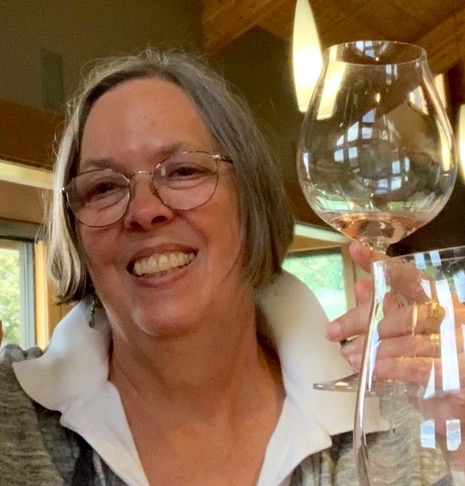
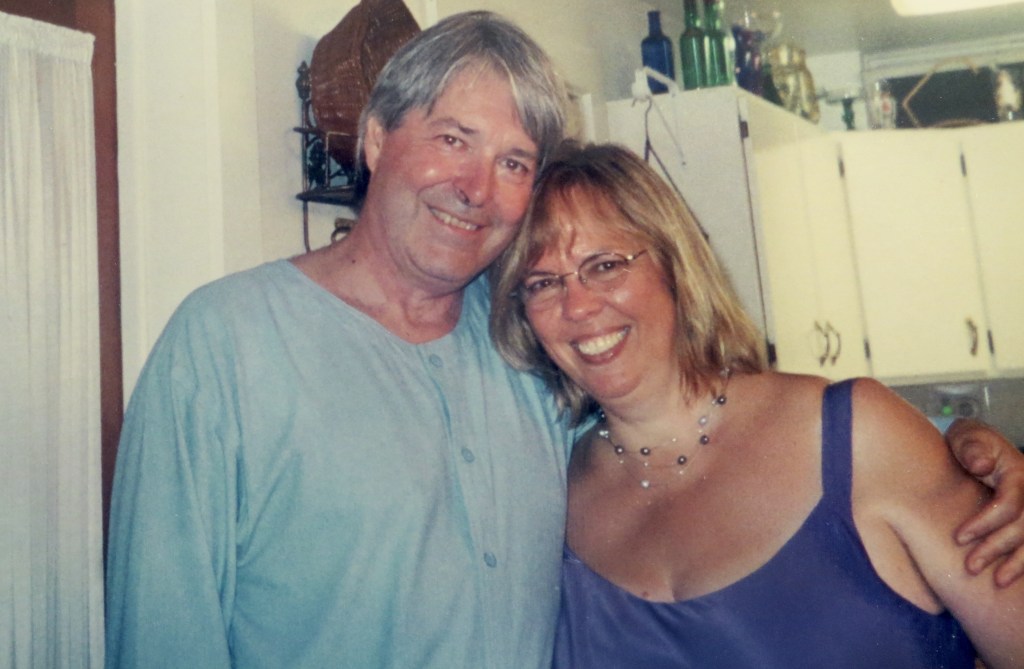
This image was taken the day before the first performance of Weaving Penelope in Oregon and before the good news about the memoir, but it’s the best celebratory photo I’ve taken in ages!

As I mentioned last time, now I will start making some very specific choices for possible illustrations for the book. I know for sure that I will use these photos. The first is the last photo I ever took of Skip, just three days before his death. It was not a happy morning that day because some drunk students had walked by the previous night, presumably on their way home from the bar to their nearby campus (not the university where I was teaching), and one lunkhead thought it might be funny to toss our full recycling bin (on the curb awaiting early morning pickup) through the back window of our car parked in the driveway. Pointless and opportunistic vandalism, pure and simple.
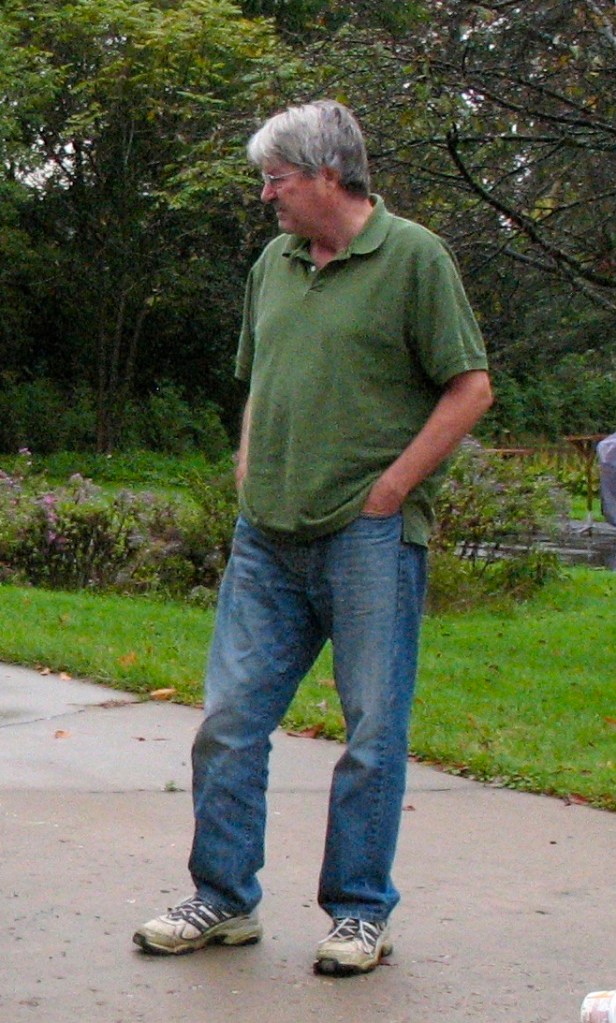
The pictures of the car were originally for insurance purposes, but I’m glad I included him in the frame of one of the photos I took that morning.

Another photo I know I will include is of Skip during our last vacation, just two months before his death. He loved the area around York Harbor, Maine, a place he had gone often throughout his life and was happy to share with me for the first time. And he love, love, loved being on the water. During that vacation, we took three boat trips in just two days out of Perkins Cove: a lobster boat demo tour, a large racing sloop that took us out onto the ocean some distance from shore, and a small sailboat with only us, the captain, and a handful of other passengers, where we heard the latest story about George Bush, Senior, who had recently grounded his boat in front of his Kennebunkport home, which resulted in his secret service detail taking over piloting when the boats got close to land from that point on.
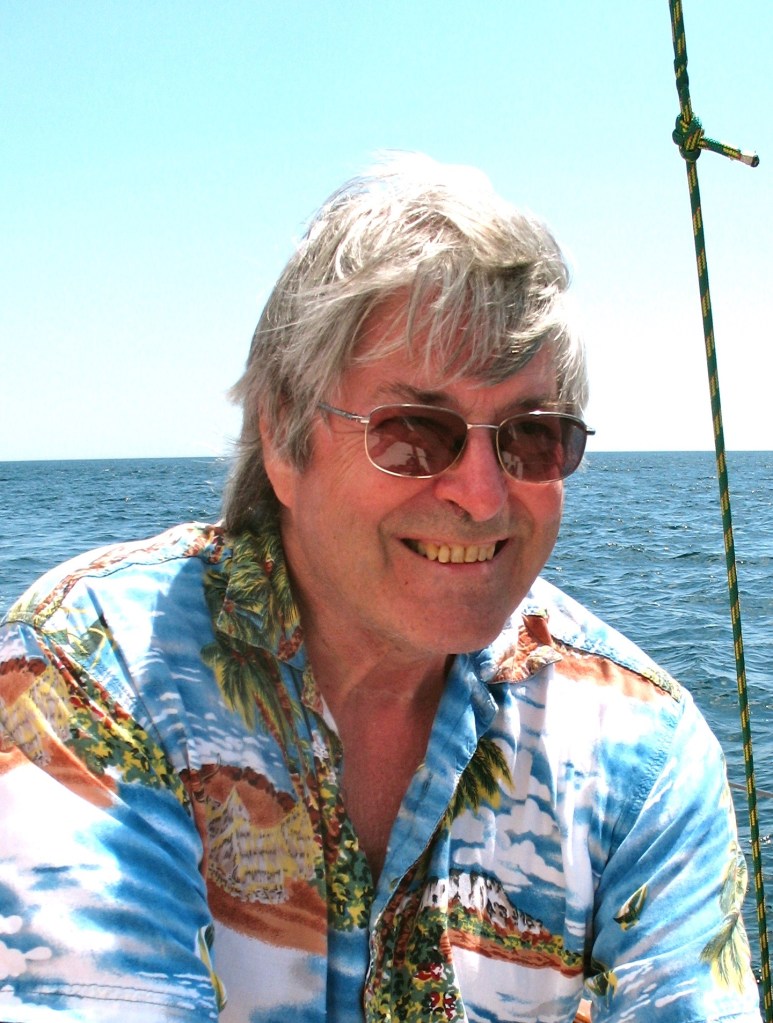
It’s easy to see that being on the water brought Skip great pleasure.

And I’m sure I will include photos of Skip and Maren, his first grandchild. The two of them had a very special sympatico from the moment they laid eyes on each other. Though she was only 3 ½ years old when her “Papa” died, and though they didn’t have a habit of phone conversations while he was living, she continued to talk with him on her plastic phone with a direct line to Heaven for many weeks after he disappeared from her day to day life.

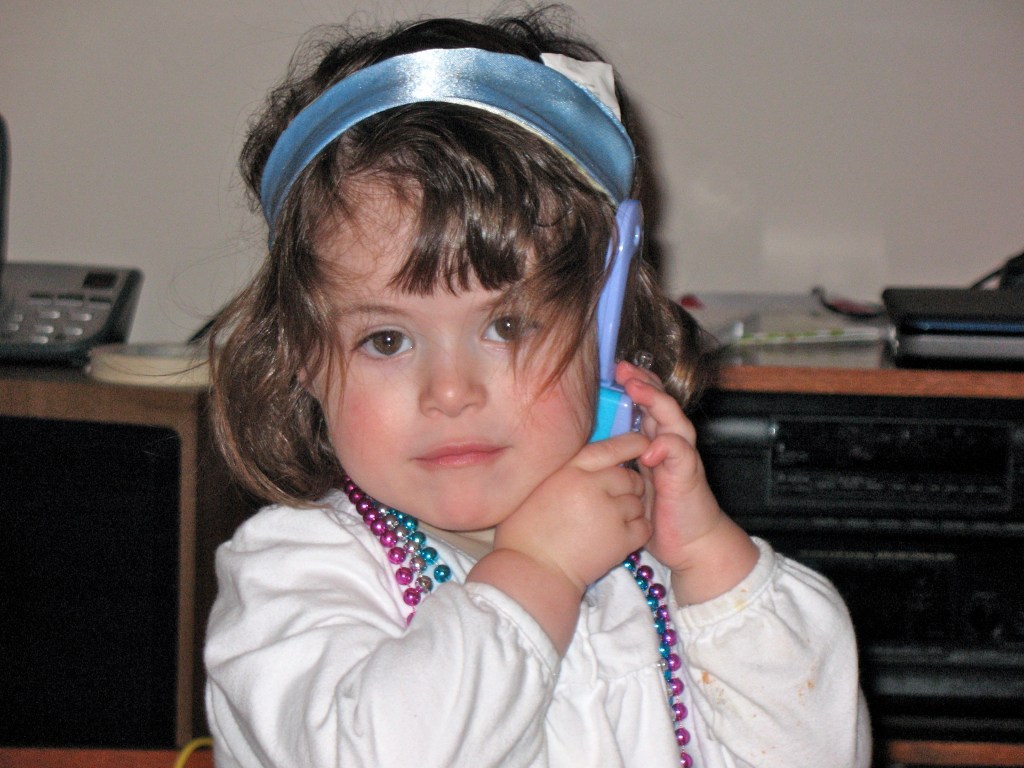
Top photo is from our summer visit in June 2009.

The second is from March 2010 – I suspect she got that phone for Christmas the previous year.

And the second grandchild came just five months before Skip’s sudden death. He doted on that little boy and was looking forward to watching him grow up and teaching him how to play baseball and to be a Red Sox fan. I’m sure he would have been just as devoted to Trenton as he was to Maren, though he never got the chance.

Skip looks both delighted and exhausted. I’m sure he worried about his daughter’s second labor all night before we were able to head to the hospital bright and early in the morning to meet the new arrival.

As I wait for the official editing process to start, I’m still participating regularly in my wonderful women writers’ group, which means that I’m scheduled to present new work every few weeks for the next three months. So, I continue to work on more essays that might become part of a future Mosaic Memoir, even though I have no idea whether they will cohere as a book project or exist as separate essays in the long run. Right now, I’m writing about a series of psychic readings I had in the late 1980s when I was in my mid-to-late 30s and involved in the first serious relationship after my divorce from my first husband. It’s fascinating to me to reflect on those readings and the young woman I was 30 years ago, and I hope I can make it interesting to potential readers as well.

As if that wasn’t enough for me to do in early 2023, Richard and I continue to refine our script for Weaving Penelope in hopes of finding somewhere for a full production in the reasonable near future. We’re almost done!

A New Memoir Submitted; a New Play Performed

(October 5, 2022)

The end of summer and early autumn has been an incredibly busy time for me this year. Earlier this summer, I wrote to you about a play I’d been working on for years, Weaving Penelope, which is the story of the wife of Odysseus and what she did for 20 years while her husband was off having his eponymous adventures. The play alternates between storytelling choral scenes (in the style of Greek theatre, using voice, music, movement, and ritual) with more realistic character interaction scenes. I’m delighted to report that—unlike the Massachusetts workshop which was derailed by Covid just days before the scheduled showcase last June—the Oregon workshop showcase happened as scheduled, thanks to the sponsorship of Keizer Homegrown Theatre (who gave us rehearsal and performance space on their outdoor patio) and Ronni Lacroute (who generously funded stipends for the artists and covered production incidentals for both workshops).

Richard and the cast of Weaving Penelope
 

The Oregon cast (only half the number needed for a full production) did heroic work presenting an “enhanced stage reading” to an invited audience. My co-playwright, Richard Carp, unexpectedly ended up directing the Oregon workshop due to serious medical challenges experienced by the original director. He got first-hand experience working with his own script as director, while I observed his rehearsals in the week before the showcase performance, keeping track of any script changes. Both our experiences were quite useful for continuing script development. Though we solicited actor feedback from both casts, he and I were also able to experience audience responses directly and got terrific constructive feedback from those who attended the talkbacks after each showcase performance. We are working on one more revision that we hope to complete before the holidays. Our next goal will be to secure a full production somewhere in 2023 or 2024, perhaps in a university setting or in a pro/semi-pro theatre company somewhere.

Weaving Penelope onstage during final rehearsals for the workshop showcase

Before going out to Oregon for the last week of rehearsals and the workshop showcase, I submitted the manuscript of what I am calling my “grief memoir,” called That Day, And What Came After. to my publisher Here is a brief book description that I sent with the manuscript:

What if you came home one day and found your husband dead in his favorite chair? This grief memoir explores the author’s experience of the unexpected death of her husband from sudden cardiac arrest a mere three months after his doctors had pronounced him hale and healthy. The author shares details of the couple’s later-in-life courtship and marriage as well as other experiences she has had along the grieving road in the years since becoming a widow.

In our society, we often don’t want to talk or even think about death, so stereotypes about widows exist. However, each person’s grief journey is unique, and sharing tales of those experiences can be helpful and useful for those who find themselves in a similar situation. Though not a self-help book, this memoir is the story of a widow who defied the stereotype that widows are expected to “get over it” and move on with their quiet lives. Instead, this widow “got through it” and is now sharing her journey in hopes of helping others in comparable circumstances.

Our commitment ceremony photo (September 2005)

Though I don’t officially have a contract or a publication target date yet, I’ve been told by someone in the know in the publisher’s office that it’s very rare for them to decide not to publish a second (or in my case a third) book from an author they’ve published in the past. So, I’m hoping I’ll be able to share much more specific good news in the future. Now I need to start making some choices for possible illustrations for the book. I have tons of photos of Skip, who was very photogenic, so the task will be to find the ones that will help illuminate our story together.

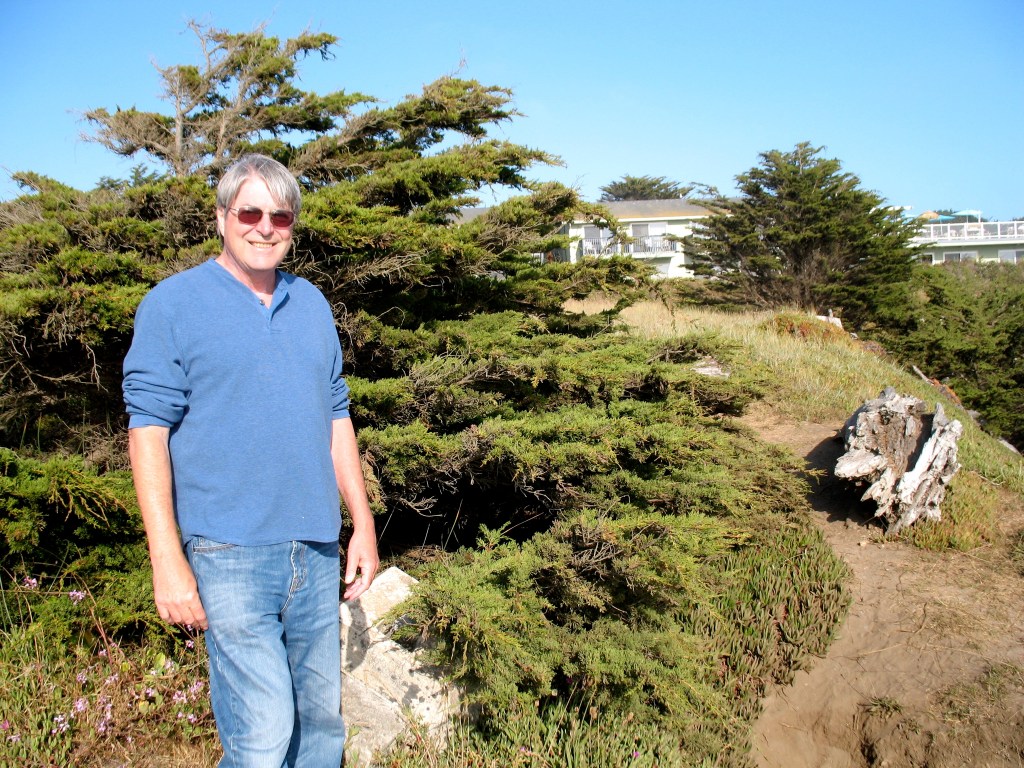
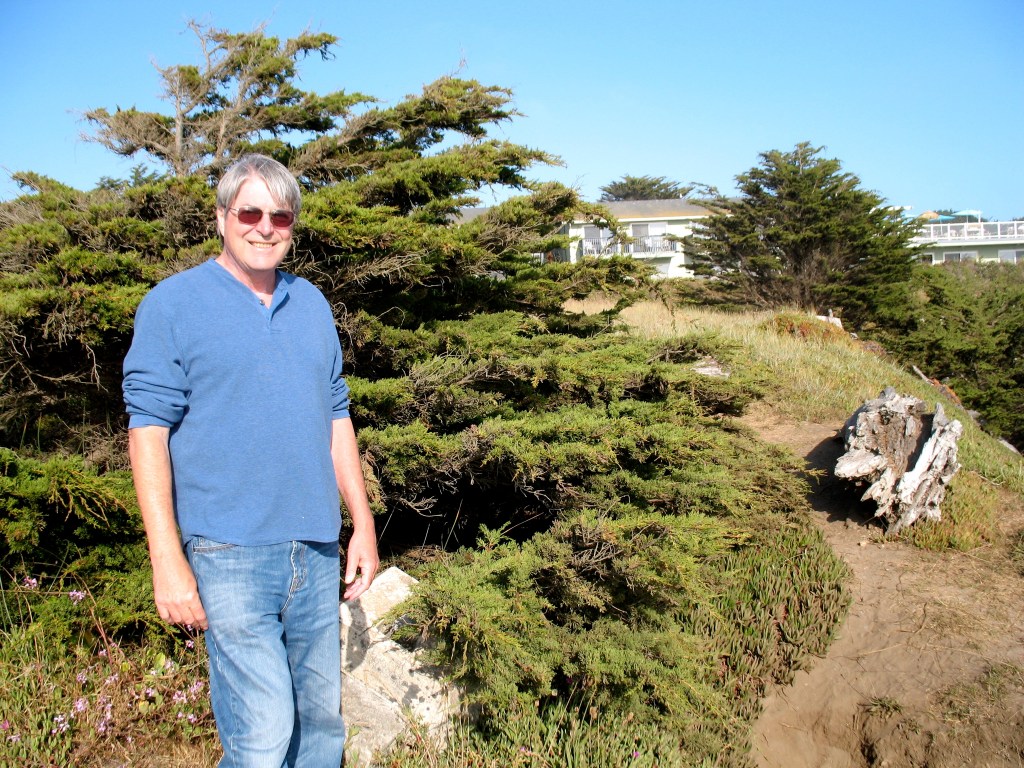
The famous “geezer model” on a trip to the northern California coast (July 2009)

What am I working on next, you ask? That’s a very big question at the moment. I have no concrete ideas for a new book, and I’ve been writing short essays in the meantime, just to keep my creative juices flowing. I identify those essays as part of my Mosaic Memoir, but I have no idea whether they will cohere as a book project or simply live as separate essays. My next concrete writing task, however, is to start working on the “matter” (details and insights that will become useful for publicity and marketing once the book is published), so I’ll be ready when Sunbury gives me a publication date and assigns an editor.

Finding Sisters Isn’t the Only Thing I’ve Been Focusing On in 2022

(July 4, 2022)

Since I last wrote in early March about the virtual book tour I’d just completed for Finding Sisters, lots has been happening for me on the writing front. The first news is that the audiobook version of Keeping the Lights on for Ike finally came out last month! Though the initial recordings were completed in November of 2020, various complications, including a shift in personnel dealing with the project, a few technical glitches, and some general lack of communication between Amazon and Sunbury during the pandemic slowed things down, but as of June 9th, the Audible version of Keeping the Lights on for Ike, read by yours truly, is now on sale. There will also be an audiobook version of Finding Sisters, but Sunbury has now engaged a new company to coordinate their audiobooks, so it won’t be read by me (in spite of the fact that I did voiceover work back in the day when I was still occasionally working as an actor), but I’ll be sure to let everyone know when that one comes out as well.

The link in this screenshot image is not live, but you can check out a sample of the audiobook here:

In May and June, I spent most of my time focusing on a playwriting project that has been on my radar for many years. Weaving Penelope, written with my old friend and theatre colleague, Richard Carp, is a play exploring the mostly untold story about the wife of Odysseus, who ruled her husband’s kingdom while he was away fighting the Trojan War—and having other adventures—for 20 years. It imagines Penelope’s experiences and expands on scenes from Homer’s Odyssey. The play nods to some Greek theatre conventions, including the use of a chorus of players who narrate the story and out of which all characters—except Penelope—emerge. Richard and I had been working on the play for well over a decade, only completing it once we had both retired from teaching and academic administration. We had a very successful Zoom reading in the spring of 2021 with participants in four states, and in 2022, thanks to the sponsorship of Keizer Homegrown Theatre (KHT) who gave us a fiscal umbrella and an Oregon theatre facility to use, and the generous patronage of Ronni Lacroute (supporter of the arts extraordinaire), we scheduled two in-person workshops with directors and actors to further explore the play on its feet: one outdoors at a private residence in western Massachusetts in June and another at the KHT courtyard performance space in September. Unfortunately, in spite of all our careful rehearsal protocols and regular testing, Covid—plus a death in the family of another cast member—cancelled our showcase performance in Massachusetts. Though we weren’t able to get audience reaction to a performance, we were able to get some very valuable feedback about working with the script from the actors in the ensemble, and we are doing some minor adjustments to the script this summer, before rehearsals begin for the coming Oregon showcase.

This is the image we used on our audition announcements for the Massachusetts workshop.

In the middle of all this other excitement, I have been working slowly but surely on my grief memoir. I started writing it in 2017 (seven years after my husband’s sudden death but the first time I could articulate coherent thoughts about what I wanted/needed to say about that event and the effect it has had on my life), and the manuscript, called That Day, And What Came After: Finding and Losing the Love of My Life in Six Short Years, is almost ready to propose to my publisher. The narrative starts with the day Skip died, takes the reader through the first month of my widowhood, including his funeral, burial, a memorial event at our house, and my struggle to find a new path for my life, and then jumps back to the beginning of our relationship and details the life we were building together after our late-in-life marriage. In addition to the more traditional relationship narrative, I had also written several short essays about particular challenges I encountered “Along the Grieving Road” and curated some of the entries in my grief journal to share with readers. Every word of this memoir has been shared over the past several years with my wonderful women writers’ group, and they have given me some terrific advice on the text, which has now been revised several times. This spring, the big challenge for me was to find a structure for the memoir that would allow me to include all these disparate parts in a single, coherent whole. Thanks to my former employer, St. Lawrence University, and their generous research support for emeritus faculty, I was able to hire the professional editor who facilitates the writing group and already knew the work to work with me directly on structural issues. Now I’m in the process of reworking some of the shorter pieces and the journal selections and hope to finish the final manuscript before summer is over.

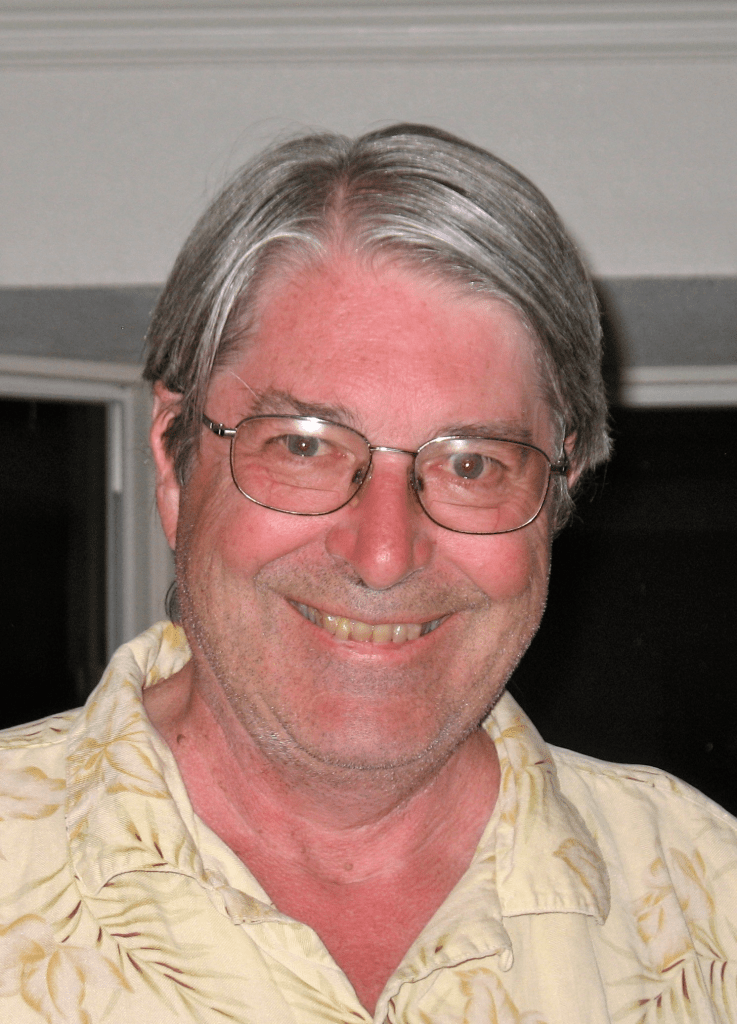
This is one of my favorite photos of Skip (aka the geezer model), taken about sixteen months before he died.

Though Sunbury Press has already published two of my books, they do not automatically accept new work from their authors without vetting each manuscript, so I will be going through an application process, just as I did with Keeping the Lights on for Ike and Finding Sisters. I hope to be ready to start that process in August. Keep your fingers crossed for me!

What to Do With a Mosaic Memoir?

(January 19, 2021)

Last month, I promised to write a bit more about my “mosaic memoir” process, but first a quick update about editorial work on Finding Sisters. I’m still inching up the queue, and I’ve learned a lot about the process for the editorial staff at Sunbury Press. The “waiting to be assigned” queue isn’t necessarily a linear progression, as I had first imagined. Each editor works on multiple manuscripts of different lengths at any given time (some being assigned more projects than others, depending on their status as full or part time editors), and while Sunbury has a wide variety of imprints (from young adult fiction to literary and historical fiction to fantasy/horror to self-help books and more) as well as their primary focus on non-fiction manuscripts of all kinds, their editors do not seem to specialize in one genre of book over another. This means that the time needed to edit each manuscript can vary wildly. It’s also possible that occasionally the head of the company might pull a manuscript on a particularly “hot topic” (such as books related to the pandemic) out of the queue and advance it to the head of the line. Though there are still only a handful of books ahead of mine in the “to be assigned” queue, there’s really no way of telling when the editing process might start for me.

I’ll share that process with you when it happens, but it’s hard to know for sure when that might occur. So, in the meantime, I’ll explain more about the essays that make up what I was calling a “mosaic memoir” in my post last month. Due to a really interesting exercise suggested by the facilitator of my writing group, I discovered something surprising about those essays. The directive was to give a working title and subtitle to the projects (mostly memoirs) we were each working on, with the goal of telegraphing to our reading audience the main topic or theme of our manuscript in progress. In other words, “what’s my story about?” Members of the writing group shared our titles at our last Zoom meeting before our holiday hiatus.

The first step for me in preparing for the exercise was to list and characterize each of the 14 essays I’d drafted so far for the mosaic memoir project, and in doing so, I discovered that the essays were evenly split in type and that there was no way to give the current collection of essays a single title. There were actually two books in progress! Not only that, I was able to list several new essays/chapters that I want to write for each project. Exciting stuff.

The first thing I realized was that I had written more than I had realized about my late-in-life second marriage, including my husband’s unexpected death from sudden cardiac arrest just months after being pronounced totally healthy by his doctors. That has now become a different project for me. It will become a much more traditional memoir and, like the story in Finding Sisters, will cover a specific time in my life (2004-present). It will have anecdotal information that anyone on a similar grief journey might find useful, but it will not be a self-help book. Instead, it will be the story of those years in my life, my interactions with my husband, and the people and actions that helped me to survive and eventually even thrive again after his death. I’ve given it a working title of Adventures with the Bartender: Finding and Losing the Love of My Life in Six Short Years. For those who don’t know, my husband owned and ran a small Adirondack hotel for seven years and loved to serve drinks to guests in our house, especially when we had parties, thus earning himself the nickname “The Bartender” among our friends. He earned another nickname, “The Geezer Model,” because of his good-natured indulgence of me and my camera when I wanted to take his picture, which was often, especially when we were traveling.

The Geezer Model on a hillside above the beach in northern California (July 2009)

For those who let me know after last month’s blog about their interest in the concept of the mosaic memoir, I want to reassure you that project is still very much a reality, though likely a lower priority at the moment than the new memoir about my widow journey. One close friend wrote me a note after learning about my mosaic memoir idea telling me she heartily approved and sharing information about an early 20th century Italian poet, Cesare Pavese (1908-1950), who famously said, “We do not remember days, we remember moments.” A former student who now teaches and performs internationally loved the idea of a mosaic memoir, and he explained to me, “Mosaic is my favorite content-process metaphor. In all my classrooms and performances, I always tell students/audiences: ‘Don’t look for a thread, we’re not following anything, keep your eyes in soft focus, the picture will begin to emerge eventually.’” And that’s exactly the point of this second project with the current working title, Mosaic Memoir: Snapshots of My Life. Though I have seven essays already written about various threads or snapshots that are important in my life, and at least four more I want to write, there’s no obvious narrative through-line. At least, not yet. These essays cover various times and experiences in my life and have current working titles like “Tomboy,” “Like Mother Like Daughter,” “Losing my Voice,” and “Brothers of the Heart” (with “Sisters of the Heart” soon to come), among others.

There’s certainly no lack of writing topics for me, and I’m sure these projects will keep me busy for many months to come. For anyone who worries that they might not have enough to say to write a memoir, I suggest you might try the mosaic approach. It’s amazing what comes up in one’s memory to write about when there’s no pressure to have a specific structural plan for a book!

For my next entry, I hope to be able to report on the start of my editing process for Finding Sisters, but I’m not holding my breath. In any case, I’m sure I’ll find something interesting to share with all of you about my two newest projects.

All These Amazing Primary Sources

(March 15, 2020)

Though I definitely did some secondary research about WWII, most of what I used in Keeping the Lights on for Ike came from primary sources handed down to me directly from my mother. I don’t remember exactly when I realized my mom had kept all the letters my dad wrote to her from overseas during the war, but I suspect it was some time after his death. Sharing them was one of her ways to remember the love of her life. As a widow myself, I now understand the desire to revisit the words of one’s spouse, lost much too soon, and I only wish my husband had occasion to write to me more often when he was alive, though I certainly wouldn’t have wished to experience a world war to make that happen.

Mom told me once that during the 1950s, some of her friends who were also military wives had seriously discussed destroying their letters. She didn’t say exactly why, but as I worked more with the letters in preparing the book, I started to suspect that there could have been a couple of different reasons. Perhaps the letters reminded the women of a terrible time in their lives that they’d rather forget, and they found the memories of wartime depressing. Or perhaps the letters were simply too intimate to be shared with their children and extended families. But Mom did tell me she was glad that she never went through with destroying them, though some of her friends apparently did so. She started sending me an occasional war letter tucked in with her own newsy correspondence when I took a job in northern New York and left the west coast for good in the early 1990s. What she never told me directly, at least not that I remember, was that she had kept so much more than just the letters from those war years.

My father had always been an avid photographer. In fact, many of the images of him in family albums were shots of him taking a photo of a plant of some kind. He loved photographing nature in all its details, both large landscapes and small closeup details of individual plants. My mom was no slouch when it came to photography, either, and the pairs of images (her photo of him bending over to photograph an interesting plant paired with his photo of the plant itself) were always fun to look at. Mom was an amateur mycologist, and among the slides was a remarkable collection of mushroom images that both of them had taken, which I eventually donated to my university’s Biology Department. After Dad’s death at age 57 in 1972, Mom started asking me to join her in looking at slide shows of his photos; they were often family photos of my childhood, but there were lots of other images as well, some of them historically significant. I eventually donated their slides of the Vanport flood of 1948 to the Oregon Historical Society. It was through this activity of looking at random slides with Mom, I also realized that among the hundreds of slides she kept in a large wooden cabinet in the dining room were many images Dad had taken during the war. Because she had kept them out of the light and only viewed them occasionally, when they finally came my way after she had to move out of her house and into assisted living, they were in remarkably good condition for their age; the wartime slides were by then over 60 years old.

The biggest surprise I discovered in packing up the contents of Mom’s house was that she had kept lots of other memorabilia from the war years in addition to the letters and the slides. In fact, I often tell people that Mom scrapbooked the war. Finding those scrapbooks in a drawer in her bedroom when I was cleaning out her house before the place was sold was like finding some kind of treasure trove of history. The scrapbooks were full of newspaper articles, photos that I presume Dad had sent to her from time to time with his letters, postcards, ration books and coupons, matchbook covers, airline tickets, and other fascinating memorabilia from those years.

Perhaps knowing her tendency to save words and images about the war, her younger sister had saved Mom’s letters home from Dad’s basic training and subsequent assignments at Fort Leonard Wood in the spring and summer of 1942, and she had given them to Mom to add to her collection at some point when they were both much older. So, in spite of the fact that Mom’s end of the correspondence when he was overseas didn’t survive, I was able to get a good sense of what she thought about their early Army life before he was shipped off to Europe in the fall of ‘42. In addition to the scrapbooks, that same bureau had another drawer full of Mom’s own writings, mostly from various creative writing classes she had taken at the local senior center when she was in her late 70s and early 80s. She had been an aspiring journalist in her youth, and the urge to write about all kinds of things never left her. Many of those stories were about her own childhood, some about the adventures of her kids (me and/or my brother), but some were also about her thoughts on the war and its impact on the lives of those who lived through it.

After I brought the slides and scrapbooks home with me and realized how many images there were and their value as visual illustrations to go with the letters in some as yet undecided way, I applied for and received generous support from my employer, St. Lawrence University, in the form of a technology grant to digitize the best of the hundreds of slides and to scan images from the scrapbooks, as well as to hire a student worker to clean up the scratches and dings on the digitized images. At this point, I wasn’t sure yet what I might do with these images and was still thinking they might become projections in some kind of theatrical presentation, but I knew for certain I wanted to use them somehow.

Next time, I’ll share the challenges of transcribing over 200 letters and how I figured out what I wanted to do with them once I finished the transcriptions. Look for that entry at the end of March.